

Moisture-Rich Cat Food
Wundercat
Picky Cat
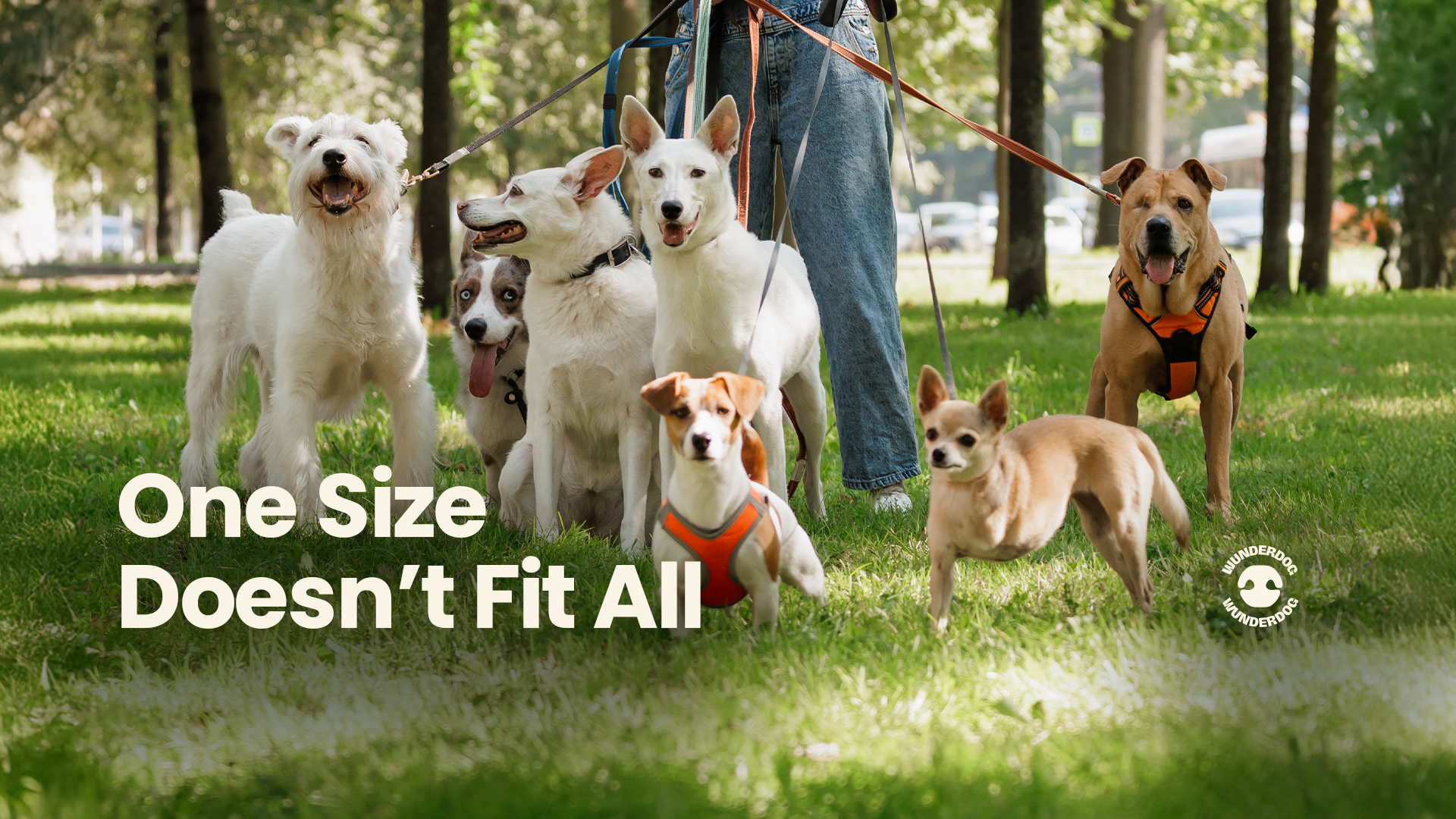

Most dog food is built around an idea that does not hold up in real life: that there is an “average dog” with average needs.
In reality, no two dogs are the same. They differ in breed, size, age, lifestyle, metabolism, and health. A young, energetic Husky living in the UAE heat does not have the same nutritional needs as a senior Chihuahua spending most of the day indoors. Yet for years, many dogs have been fed as if those differences do not matter.
This is where personalised dog nutrition comes in. Not as a trend or a complicated system, but as a more thoughtful way of feeding. Personalised dog nutrition means responding to the dog you actually have, rather than forcing them to fit into a generic feeding guide.
In the UAE especially, where climate, indoor living, and daily routines already place unique demands on dogs, a one-size-fits-all approach often falls short. Personalisation is simply about closing that gap and feeding in a way that reflects real life, not assumptions.
Personalised nutrition has gained momentum in the UAE because the relationship between people and their dogs has changed.
Over the past decade, the UAE pet food market has grown by more than 250%, reflecting how dogs are increasingly treated as family members, and how their health, comfort, and longevity are taken seriously. Pet parents are no longer focused only on convenience. They want to know what they are feeding, why it matters, and how it supports their dog over time.
Local lifestyle plays a role too. High temperatures limit outdoor activity for much of the year. Many dogs live indoors, often in apartments. These realities affect energy use, weight, digestion, and overall wellbeing. Feeding decisions that might work in cooler climates do not always translate well here.
Custom dog food services and personalised dog diet plans have emerged as a response to these conditions. They reflect a growing understanding that thoughtful, individual care leads to better long-term outcomes than relying on generic solutions.
Most commercial dog food is formulated for an imaginary middle ground. An “average” dog of an “average” size, with an “average” activity level and no specific sensitivities.
In practice, this creates problems. Smaller dogs can be overfed. Larger dogs may not get enough of what they need. Dogs with lower activity levels gain weight easily, while more active dogs struggle to maintain energy. Even when feeding guidelines are followed carefully, issues can still appear over time.
This is not because the food is necessarily poor quality. It is because the assumption behind it is flawed. Dogs are not interchangeable, and their nutritional needs are shaped by far more than a number printed on a bag.
Once you accept that the “average dog” does not exist, personalisation stops feeling indulgent. It becomes a practical response to real differences.
Personalised dog nutrition starts with understanding what shapes a dog’s individual dietary needs in the first place. It is not about chasing perfection. It is about recognising the factors that genuinely influence how a dog uses food.
Breed and size affect metabolism, growth patterns, and physical load on joints. Age and life stage matter because puppies, adults, and senior dogs use energy and nutrients very differently. Activity level and lifestyle matter because an energetic dog burning calories daily has different requirements from one spending most of the day indoors.
Weight and body condition are equally important. Two dogs of the same breed and size can need very different portions depending on how easily they gain or lose weight. Allergies and sensitivities further narrow what works, particularly when digestion or skin health is involved. Health conditions and wellness goals also shape nutrition, whether the focus is supporting joints, managing weight after neutering, or keeping digestion settled.
These factors do not exist in isolation. Together, they form a unique nutritional profile specific to each dog. Personalised dog nutrition simply means using that full picture to guide feeding decisions, rather than relying on a single label or feeding chart.
Personalisation becomes easier to understand when you look at real contrasts.
A large, thick-coated breed such as a Husky living in the UAE heat often needs careful calorie control and support for heat tolerance, while a small breed may need denser nutrition in much smaller portions. Feeding them the same way won’t work for both.
Life stage also plays a major role. Personalised puppy food plans require energy and nutrients to support growth and development, while senior dog nutrition often needs fewer calories and more targeted support for joints or digestion. Feeding both stages identically can lead to problems at either end.
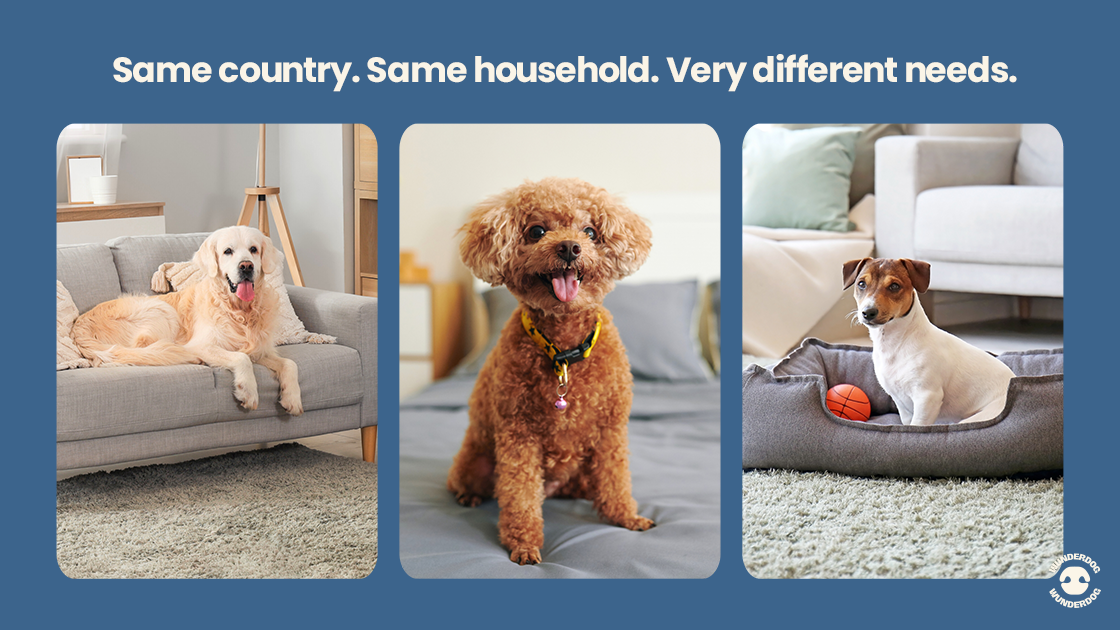
Lifestyle matters just as much. A highly active dog who trains or plays daily uses food very differently from an indoor dog with limited movement. Even within the same household, two dogs can thrive on very different tailored meal plans.
These differences are normal. Personalisation simply acknowledges them instead of ignoring them.
When people think about personalised nutrition, they often focus only on ingredients. While ingredients matter, they are only part of the picture.
Portion size plays a major role in whether a diet works. Two dogs eating the same recipe may need very different amounts to maintain a healthy weight. Feeding frequency and routine also matter. Some dogs do better with meals spaced evenly through the day, while others thrive on fewer, structured feeds.
Calorie needs change over time as dogs age, become more or less active, or recover from illness. Customised meal plans account for these shifts, rather than locking a dog into a fixed plan that no longer fits.
This aspect of personalisation is often overlooked, but it is one of the most impactful. Getting portions and routines right can make as much difference as changing the food itself.
There are times when personalisation becomes especially important. Dogs with sensitivities or health concerns often struggle most on generic diets.
Some dogs need gentler approaches to digestion. Others react poorly to certain proteins or ingredients and require more careful selection. Dogs carrying extra weight benefit from controlled calories and structured portions, while dogs with joint stiffness may need nutritional support that helps maintain mobility and comfort.
In these cases, customised food formulations can help reduce trial and error. Instead of cycling through foods and hoping for improvement, feeding is guided by the dog’s specific needs and responses.
It is important to be clear that nutrition supports health, but does not replace veterinary care. Personalised feeding works best when it complements professional guidance, especially for dogs with ongoing medical conditions.
Fresh dog food naturally lends itself to personalised feeding because it offers clarity and flexibility.
Portions are easier to measure and adjust. Ingredients are visible and transparent. Recipes can be adapted as a dog’s needs change, whether that means adjusting calories, rotating proteins, or supporting specific wellness goals.
For many pet parents, fresh meals also improve consistency. When meals are clearly portioned and dogs enjoy what they are eating, there is less temptation to add extras or change plans frequently.
True personalisation is not a single questionnaire or a one-time decision. It is an ongoing process that adapts as the dog changes.
Personalisation should feel supportive, not complicated. The goal is clarity and confidence, not constant adjustment.
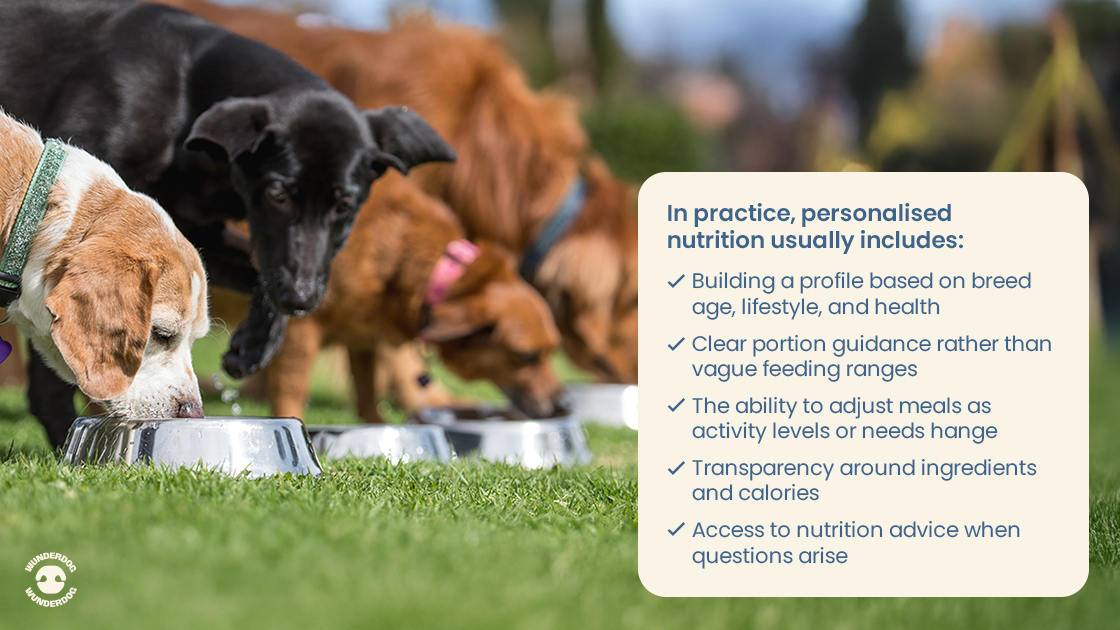
The UAE now offers several options for pet parents interested in personalised feeding, from premium dog food brands to subscription services and customised meal delivery. These services differ in how they approach personalisation, but the most useful ones share common traits: clear portioning, ingredient transparency, and the ability to adapt plans over time.
When exploring personalised options, it helps to look beyond marketing language and focus on how well a service responds to your dog’s individual needs. True personalisation is practical, flexible, and grounded in real-world feeding, not just labels.
Personalised dog nutrition is not about being complicated or indulgent. It is about paying attention.
Dogs are individuals, shaped by breed, age, lifestyle, and health. Feeding them as if they are all the same often leads to compromises that show up over time. Personalisation simply acknowledges those differences and responds to them thoughtfully.
In the UAE, where climate and lifestyle already influence how dogs live, personalised feeding can make everyday care easier and more effective. By feeding the dog you actually have, rather than the one a feeding chart assumes, you support comfort, wellbeing, and quality of life for years to come.