

Animal Pain Awareness
Wundercat
Pet Care


For most dog owners in the UAE, neutering or spaying represents a responsible milestone in their dog's life. It prevents unwanted litters, reduces roaming behaviour, and lowers the risk of certain cancers. You drop your dog off at the clinic, pick them up wearing the plastic cone of recovery, and focus entirely on those first ten days of healing.
But here's what often gets lost in the discharge room conversation: while your dog's incision heals within two weeks, their internal biology has been permanently altered. The removal of sex hormones doesn't just stop reproduction, it fundamentally changes how your dog's body burns energy. If you continue feeding the same food in the same amounts after surgery, weight gain isn't just a risk. It's a near certainty.
Understanding this metabolic shift is essential for keeping your lean, active dog from becoming another obesity statistic.
The common belief is that neutered dogs gain weight because they become 'lazy.' This oversimplification misses the real story. While some dogs may become slightly less active, the primary driver of post-neutering weight gain is internal, not behavioural.
Sex hormones like oestrogen and testosterone play a crucial role in regulating your dog's metabolism. When these hormones are removed, your dog's metabolic engine essentially downshifts. Research published in Nutrition Research Reviews confirms that neutering leads to decreased metabolic rates and energy expenditure—not simply increased food intake.
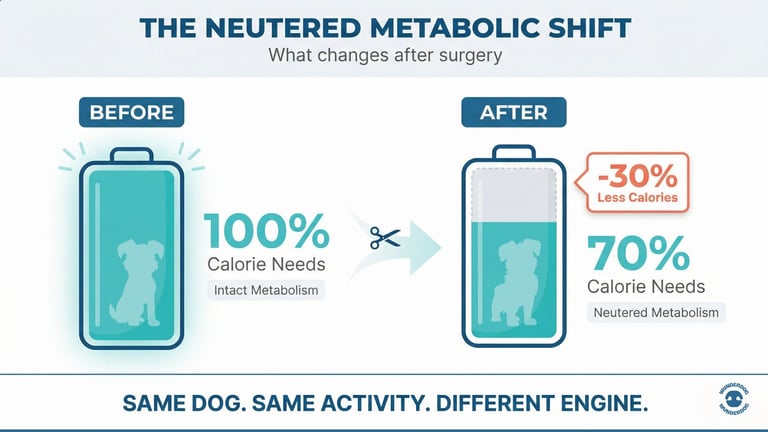
Studies indicate that a neutered dog's Resting Energy Requirement can drop by approximately 20 to 30%. To put this in perspective: a 20kg dog that previously needed around 1,000 calories daily to maintain their weight may now only require about 700-800 calories. This metabolic drop happens almost immediately after surgery
If you continue filling their bowl to the same line as before, you're unknowingly overfeeding them by nearly a third… every single day. Over six months, this surplus energy accumulates as stubborn fat tissue, particularly around the abdomen.
The challenge is that this gradual accumulation is easy to miss. Many owners struggle to recognise when their dog has crossed from healthy to overweight, a phenomenon known as 'fat blindness.' Learning to accurately assess your dog's body condition is essential for catching weight gain early.
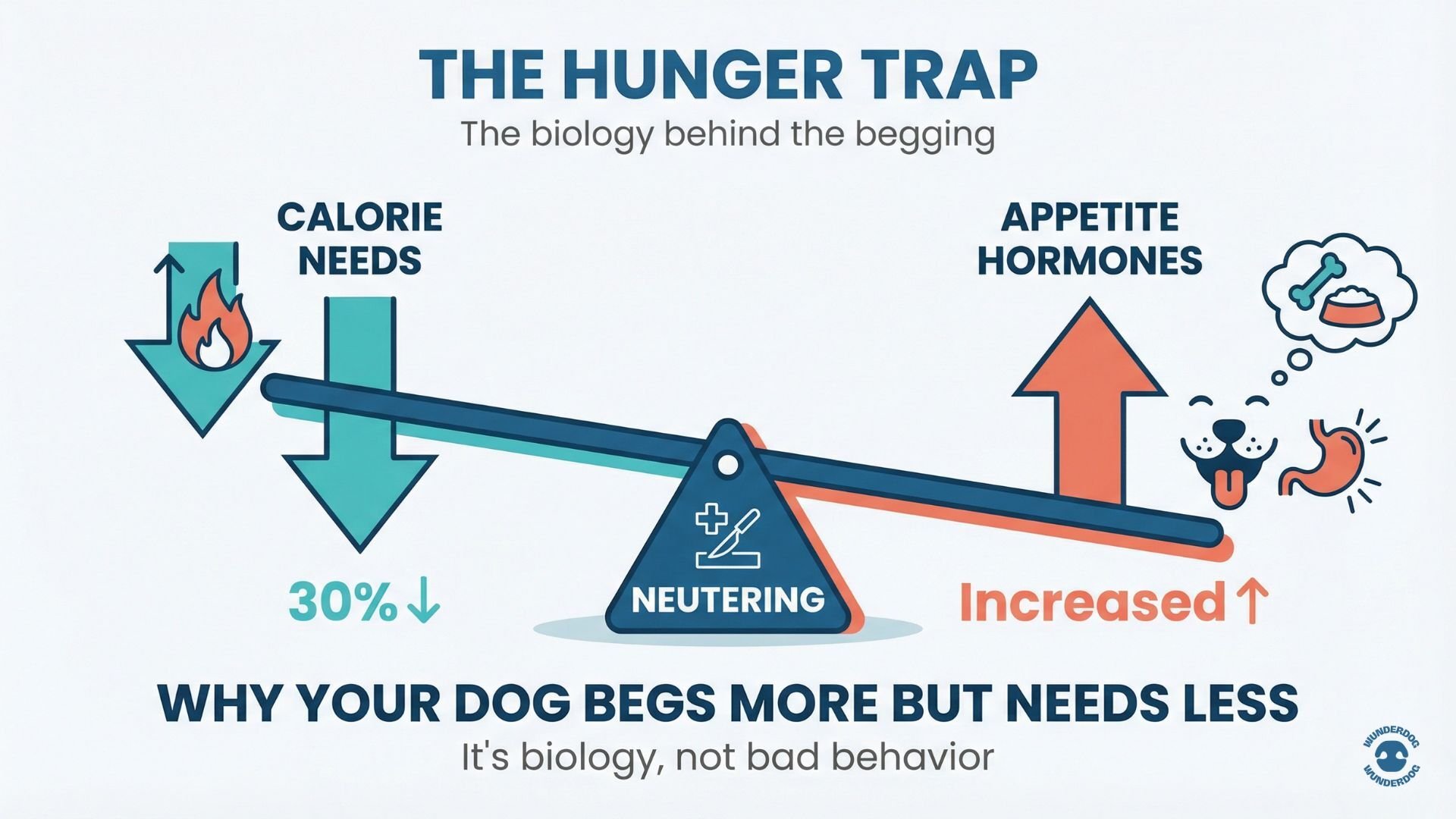
Here's where it gets particularly challenging. Just as your dog's calorie needs plummet, their appetite often increases. Oestrogen naturally acts as an appetite suppressant. When it's removed, research confirms that neutered dogs demonstrate increased voluntary food intake and more persistent food-seeking behaviours. Understanding the science of satiety becomes essential for managing this new reality.
So you're left with a dog that needs less food but wants more. This metabolic paradox is what we call the 'Neutered Trap', and, without intervention, it almost inevitably leads to weight gain.
Epidemiological studies consistently show that neutered dogs of both sexes are significantly more likely to become overweight or obese than intact dogs. The obesity rate in neutered dogs can reach as high as 60%, contributing to what veterinarians now call a canine obesity epidemic.
Because post-neutering weight gain happens gradually, it often goes unnoticed until several kilograms have accumulated. Many owners unknowingly develop 'fat blindness,' normalising their dog's expanding silhouette because the change happens so slowly.
The most reliable method is regularly checking your dog's body condition score rather than relying on scales alone. Run your hands over your dog's ribcage every few weeks. You should feel the ribs easily with light pressure. If you need to press firmly, fat is accumulating.
If you're unsure whether your dog is at a healthy weight, learning to recognise the signs early gives you the best chance of reversing the trend before it affects their long-term health.
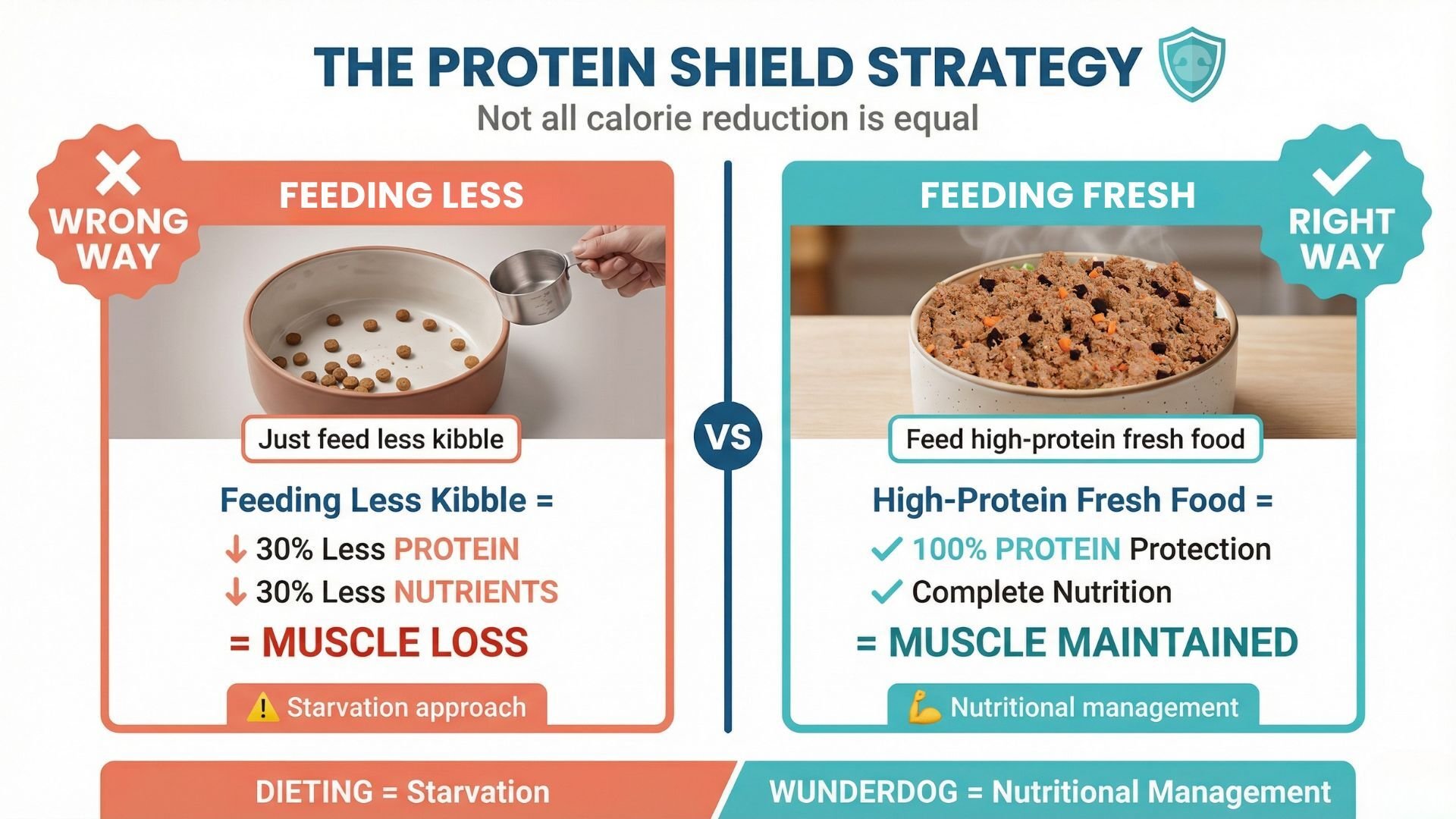
The most intuitive response to post-neutering weight gain is to simply scoop less food into the bowl. While this reduces calories, it creates a new problem that many owners don't anticipate: nutrient deficiency.
Standard maintenance diets are formulated to deliver essential nutrients like vitamins, minerals, and amino acids, only when fed at full recommended volumes. If you cut the serving size by 30% to match your dog's new lower metabolism, you're also cutting protein intake by 30%.
This matters enormously for a neutered dog. With lower testosterone levels, they're already at a disadvantage for maintaining lean muscle mass. If you restrict their protein intake, their body will begin breaking down its own muscle tissue to survive.
The result? Your dog loses muscle, which further lowers their metabolic rate, leading to even faster fat accumulation. It becomes a vicious cycle.
Breaking this cycle requires a nutritional strategy called 'protein sparing', which focuses on reducing overall calories while maintaining or even increasing protein density. Research published in the Journal of Nutritional Science found that dogs fed a diet with approximately 94g of protein per 1,000 kcal maintained their body composition and metabolic rate after neutering, while those on lower-protein diets experienced increased fat mass; even without gaining weight on the scale.
The principle is straightforward: even in a calorie deficit, muscles need adequate amino acids to repair and maintain themselves. Muscle tissue burns more calories at rest than fat tissue does, so preserving lean mass becomes your best defence against a slowing metabolism.
Managing a neutered dog's weight requires precision, not guesswork. At Wunderdog, we don't just ask about your dog's age or breed, we also factor in their neutering status when calculating their personalised daily nutrition plan.
Our algorithm applies what we call the Neutered Coefficient, calculating the exact caloric ceiling your dog needs to maintain optimal weight post-surgery. But here's what makes our approach different: we fill that calorie allowance with high-density nutrition, ensuring your dog receives complete nutrition in a smaller, more appropriate portion.
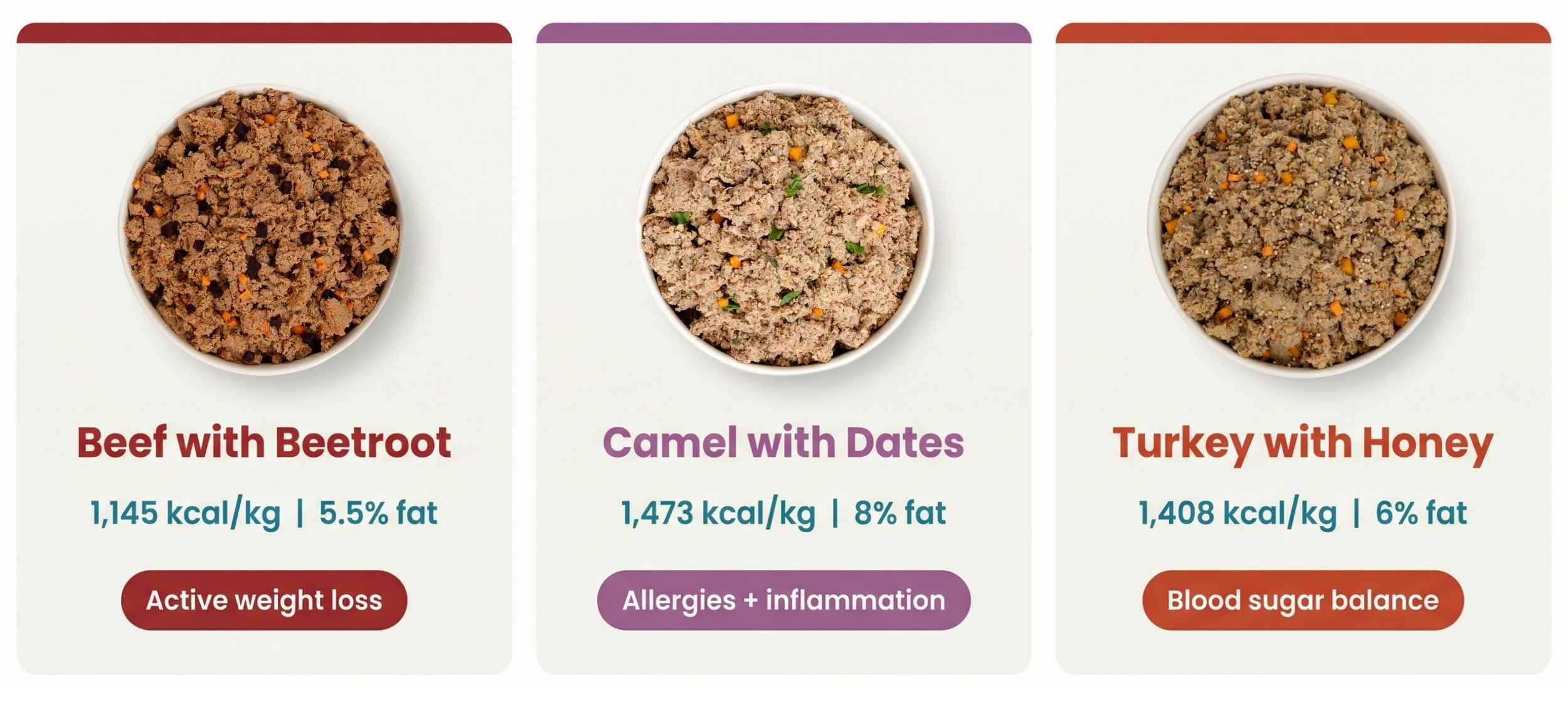
Our recipes designed for weight management, including Beef with Beetroot (1,145 kcal/kg), Camel with Dates (1,473 kcal/kg), and Turkey with Honey (1,408 kcal/kg), each offer a different but complementary approach to supporting healthy weight. Whether through higher fibre, novel protein, or balanced energy density, they're designed to promote fullness, preserve lean mass, and support metabolism without relying on a single restrictive formula.
Maintaining optimal weight isn't just about appearance. Research published in the Journal of Veterinary Internal Medicine demonstrated a clear association between body condition and lifespan in neutered dogs. Dogs maintained at ideal body condition consistently outlive those carrying excess weight.
A landmark 14-year study by Purina found that dogs fed to maintain lean body condition lived an average of 1.8 years longer than their overfed littermates. That's nearly two additional years of walks, play, and companionship. All simply from maintaining optimal weight through proper nutrition.
Additional research on fresh food diets suggests that dogs fed fresh, quality ingredients can live significantly longer than those on highly processed commercial diets: In some studies, by as much as 2.5 to 3 years.
Neutering is a responsible choice, but it requires an equally responsible nutritional adjustment. You cannot rely on your dog's old appetite or their previous portion size to guide you anymore. Their biology has changed, and their nutrition needs to change with it.
By transitioning to a scientifically calibrated, high-protein fresh diet, you can protect your dog from the metabolic trap that catches so many neutered pets. You can help them stay lean, muscular, and satisfied, proving that a change in biology doesn't have to mean a decline in health or vitality.
If you've recently had your dog neutered (or are planning to), this is the perfect time for a fresh start with their nutrition plan. Our team can help you calculate the right portions and select the optimal recipes for your dog's new metabolic reality.
Ready to reset your dog's metabolism? Start with a personalised nutrition consultation today.