
Dog Cardiac Health
wundercare
Cardiac Support
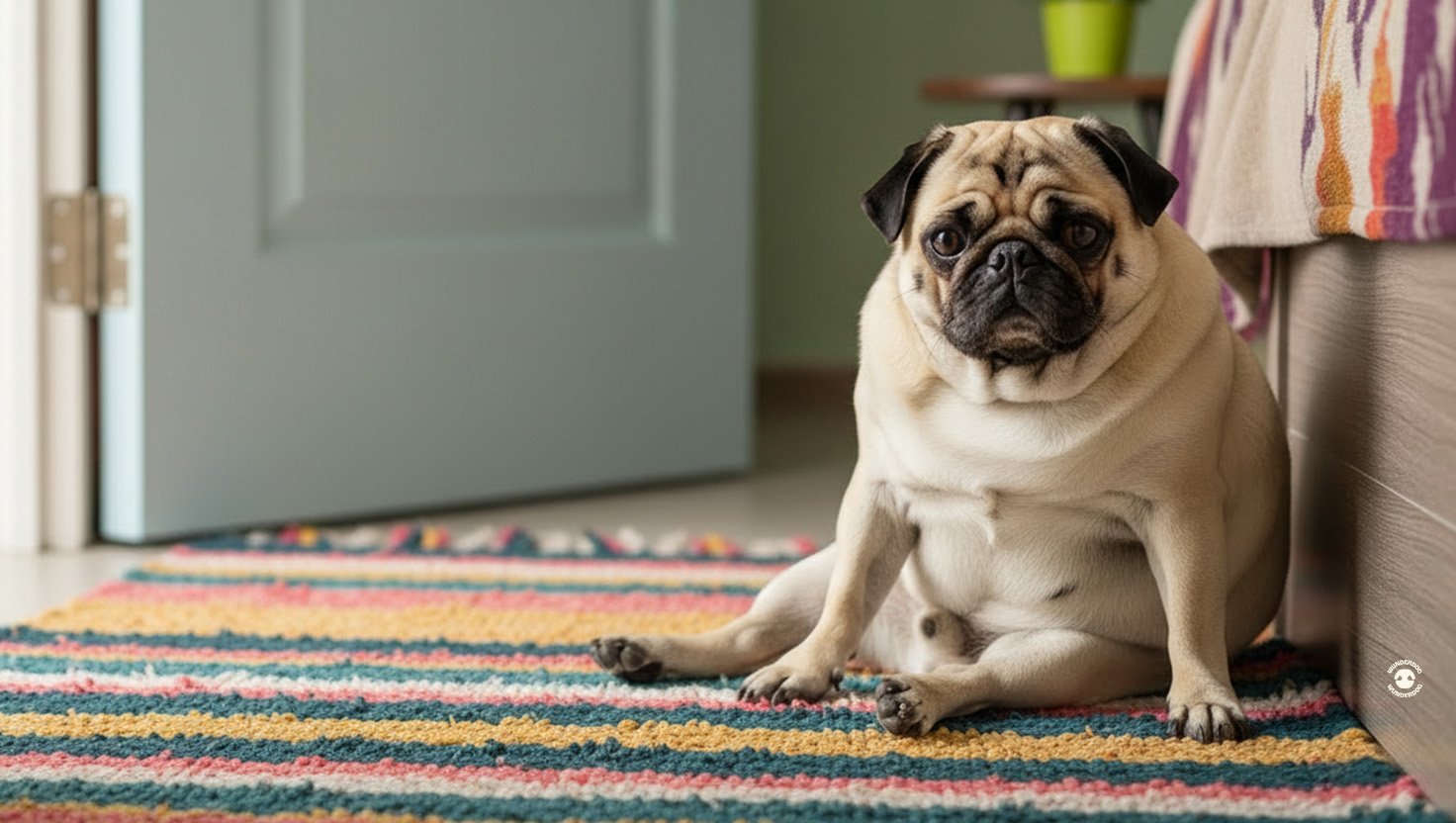

Over the last 10 years we have witnessed an increase of 158% in overweight dogs. Weight gain in dogs rarely happens overnight. It creeps up gradually through slightly larger portions, extra treats, reduced activity, or changes in age and metabolism. Many dog parents only start to question it when they notice their dog slowing down, struggling with exercise, or looking rounder than before. That is usually when the question arises: is my dog overweight?
An overweight dog is not just a cosmetic concern. Even a small amount of excess weight can affect joints, breathing, energy levels, and long-term health. The challenge is that weight issues are easy to miss, especially in fluffy breeds or dogs that have always been on the stockier side.
The good news is that dog weight loss is achievable with the right approach. By learning how to tell if a dog is overweight, understanding the health risks, and making practical changes to feeding and routine, most dogs can return to a healthier body condition.
This blog walks you through how to assess your dog's weight, recognise dog obesity signs, understand the risks, and apply clear, sustainable solutions.
If you are wondering is my dog overweight, a simple check at home can give you a reliable first answer. You do not need scales or special tools. In fact, your hands and eyes are often more accurate than the number on the scale alone.
Start by gently running your hands over your dog's ribcage. You should be able to feel the ribs easily with light pressure, similar to feeling the bones on the back of your hand. If you have to press firmly or cannot feel them at all, this is one of the earliest signs of an overweight dog.
Next, look at your dog from above. A healthy-weight dog should have a visible waist behind the ribs, curving slightly inward. If the body looks straight or rounded with no waist definition, this suggests excess fat.
Finally, view your dog from the side. There should be a gentle upward tuck of the abdomen behind the ribcage. If the belly hangs low or appears level with the chest, it may indicate extra weight.
These quick checks help answer how to tell if a dog is overweight, but they are only a starting point. Coat thickness, breed, and body shape can make visual assessment tricky, which is why a more structured method is useful.
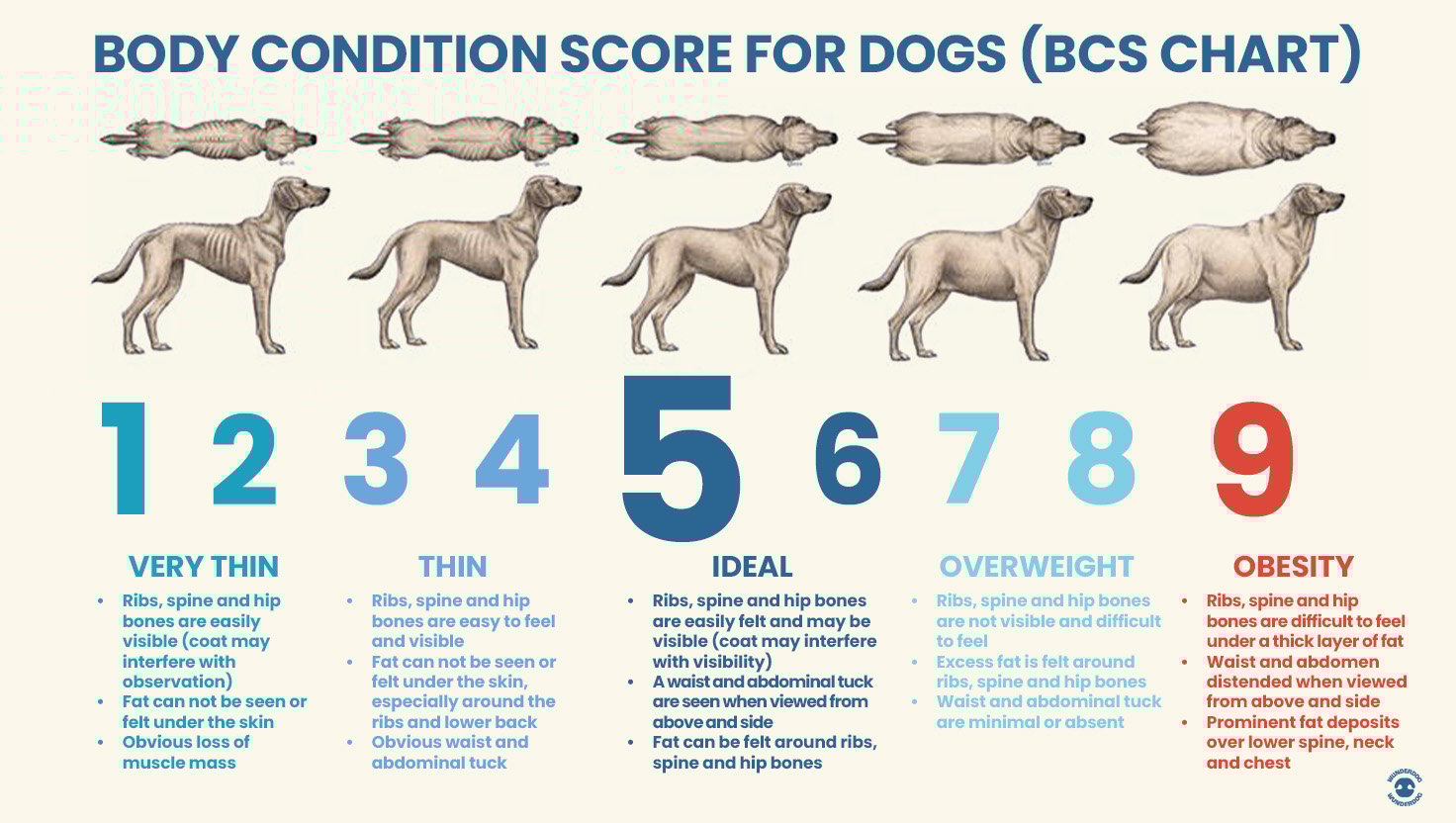
While visual checks are helpful, the most reliable way to assess whether an overweight dog is carrying excess fat is by using the dog body condition score. This is a standard system used by veterinarians worldwide to evaluate a dog's body fat independently of their size or breed.
The body condition score for dogs typically uses a 9-point scale. A score of 1 represents a severely underweight dog, while a score of 9 indicates dog obesity. Most healthy dogs fall between a score of 4 and 5.
At an ideal body condition score:
As the score increases beyond this range, fat deposits become more noticeable around the ribs, spine, hips, and base of the tail. Dogs with higher scores often show reduced stamina and mobility, even if they appear otherwise healthy.
You can estimate your dog's body condition score at home using the same rib, waist, and tuck checks described earlier, then compare your findings to a body condition score chart. However, if you are unsure or if your dog has other health concerns, a veterinary assessment is always recommended. Confirming the body condition score helps answer the question is my dog overweight with greater accuracy and provides a clear starting point for safe dog weight loss planning.
Dogs rarely show weight problems in obvious ways at first. Instead, the signs tend to develop gradually, which is why many dog parents overlook them until the weight gain becomes more pronounced. Recognising dog obesity signs early can prevent long-term health issues.
One of the most common overweight dog symptoms is reduced energy. Dogs that once enjoyed long walks or play sessions may tire more quickly, lag behind, or seem reluctant to move. Heavy or noisy panting during mild exercise is another frequent sign of an overweight dog.
Physical changes are also important to watch for. Difficulty feeling the ribs, loss of a visible waist, and a sagging belly are clear dog obesity signs. Some dogs may also struggle with grooming themselves or show stiffness when standing up or lying down.
Behavioural changes can appear as well. Overweight dogs may be less playful, sleep more, or show decreased interest in activities they previously enjoyed. These changes are often mistaken for ageing, when excess weight is actually contributing to discomfort.
If several of these signs of an overweight dog are present, it is a strong indication that body fat levels are affecting your dog's wellbeing and that action should be taken sooner rather than later.
Carrying extra weight places continuous strain on a dog's body. While mild weight gain may seem harmless, dog obesity health risks increase as excess fat accumulates, even before obvious symptoms appear.
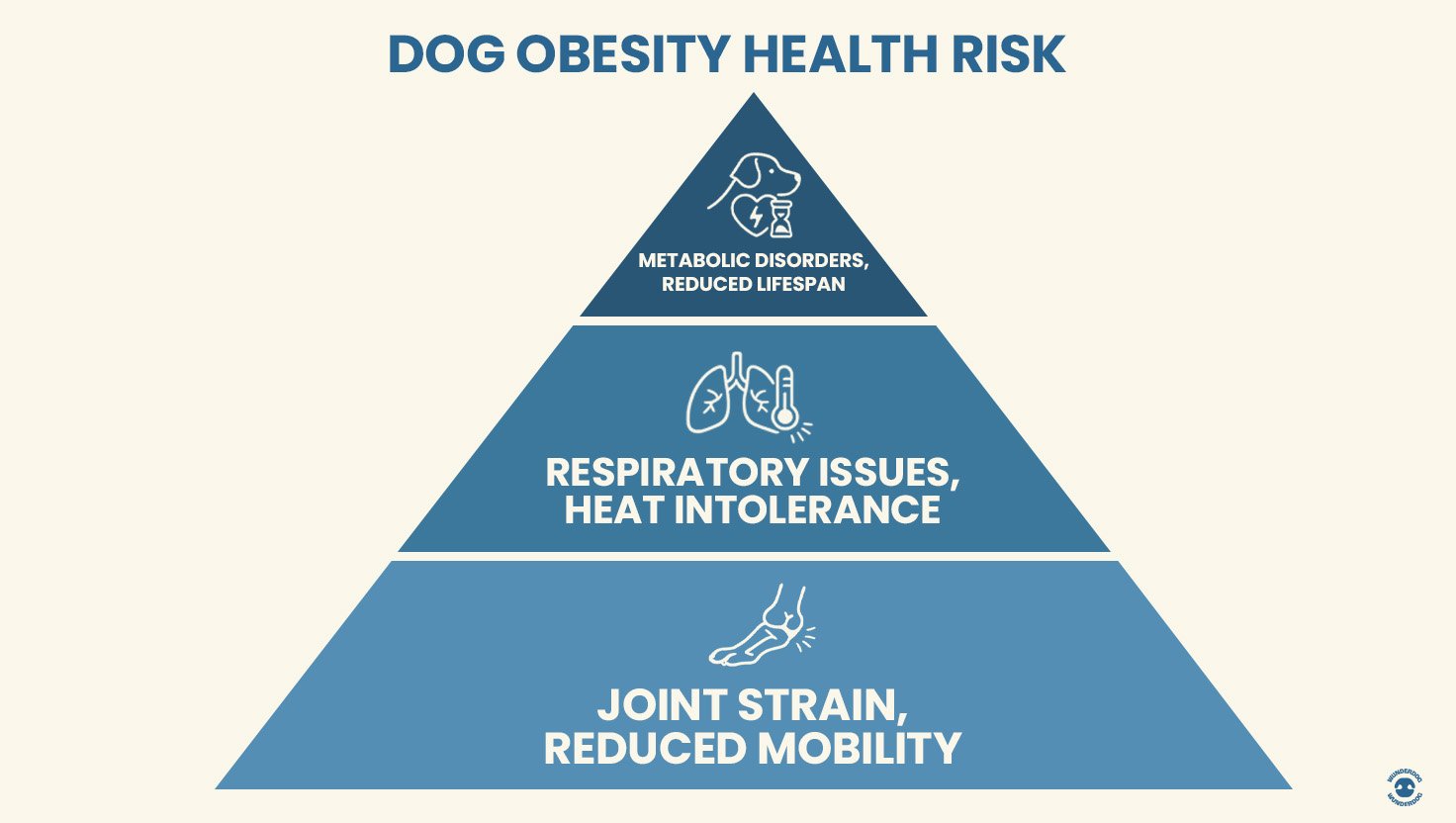
Beyond physical illness, quality of life is often reduced. Dogs carrying too much weight tend to be less active, less playful, and may experience ongoing discomfort. Addressing weight early helps reduce these dog obesity health risks and supports a longer, more comfortable life.
Understanding why dogs gain weight is essential before starting any dog weight loss plan. In most cases, an overweight dog is not the result of one major change, but several small factors adding up over time.
Portion sizes are one of the most common causes. Even slight overfeeding at each meal can lead to gradual weight gain, especially when food is measured by eye rather than weighed. Treats also play a significant role. Snacks, table scraps, and training rewards can quietly add a large number of extra calories to a dog's daily intake.
Lifestyle changes matter as well. Reduced activity due to age, injury, or a busier routine can lower a dog's calorie needs, yet food portions often remain the same. Neutering can also affect metabolism, meaning some dogs require fewer calories after the procedure.
In some cases, medical conditions such as hormonal imbalances can contribute to weight gain. If a dog gains weight rapidly or struggles to lose it despite controlled feeding and exercise, a veterinary check is important.
Recognising these factors helps answer is my dog overweight and ensures that any weight loss approach addresses the real causes rather than relying on guesswork.
Once you have confirmed that your dog is carrying excess weight, the next step is to approach dog weight loss in a way that is gradual, consistent, and safe. Rapid weight loss can be harmful, so the goal is steady progress rather than quick fixes.
Work towards a healthy dog body condition score rather than focusing only on the number on the scale. Your vet can help confirm an ideal weight range and timeline, especially if your dog has existing health issues.
Portion control is the foundation of any successful dog weight loss plan. Measuring food by weight rather than by cup reduces the risk of overfeeding and helps maintain consistency. Even small daily excesses can prevent progress.
Exercise should be increased slowly, particularly for dogs that are already unfit or have joint concerns. Short, frequent walks and gentle play are more effective and safer than sudden bursts of intense activity.
Track your dog's weight, body condition score, and physical appearance every one to two weeks. Photos taken from above and from the side can help you spot changes that are easy to miss day to day.
A structured, measured approach gives your dog the best chance of safe weight loss while maintaining muscle mass, energy, and overall wellbeing.
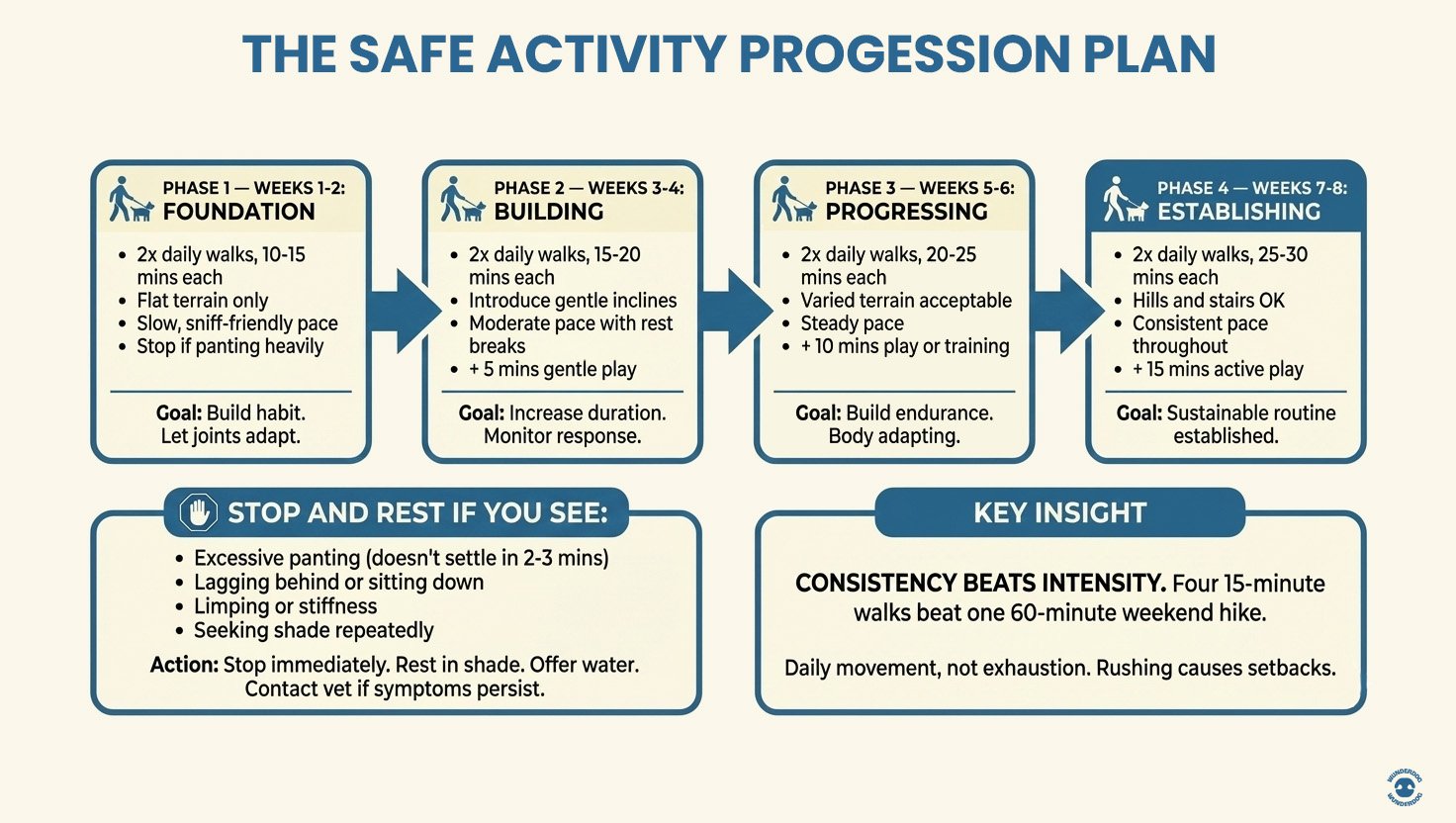
Feeding an overweight dog is not about drastic restriction. It is about providing the right nutrients in the right amounts so weight loss happens steadily while your dog remains satisfied and energetic.
During dog weight loss, the most important factors are total calorie intake, adequate protein to preserve muscle mass, and enough fibre to support fullness and digestion. Meals should be consistent from day to day, with portions carefully measured rather than estimated.
Fresh food can support this approach by offering clearly defined portions and nutrient balance without relying on guesswork. Because the ingredients and calorie content are easier to understand, it becomes simpler to adjust feeding amounts as weight changes.
Any dietary change should be gradual. Introduce new food over several days, mixing increasing amounts of fresh food with the current diet while monitoring stool quality and appetite. This allows the digestive system to adapt smoothly.
Treats often undermine weight loss efforts. One effective strategy is to use a portion of your dog's daily fresh food allowance as treats, or to reduce treats altogether while weight loss is in progress.
A clear feeding plan with veterinary guidance helps ensure that weight loss supports health rather than compromising it.
For many dogs, switching to fresh, portioned meals can make dog weight loss easier to manage and more sustainable. One of the biggest challenges with an overweight dog is controlling calories consistently, and fresh food for dog weight loss helps remove much of the guesswork.
Fresh meals are typically prepared and served in clearly defined portions. This makes it easier to feed the right amount every day and avoid accidental overfeeding, which is a common reason dogs fail to lose weight.
Gently cooked meals made with quality protein and fibre-rich ingredients tend to be more filling. Dogs often feel satisfied for longer after eating, which can reduce constant hunger, begging, and reliance on extra snacks.
Fresh food allows greater transparency in what your dog is eating. There is less reliance on calorie-dense fillers or add-ons that can quietly increase daily intake, making it easier to manage an overweight dog's diet.
Many dogs find fresh meals more appealing, which can improve consistency. When dogs enjoy their food, dog parents are less tempted to add extras to encourage eating, supporting steady dog weight loss over time.
When used correctly and portioned appropriately, fresh food can be a practical tool for helping dogs return to a healthier body condition.

When you realise your dog is carrying extra weight, having a clear starting point makes the process far less overwhelming. A simple, structured approach can help you move from concern to action with confidence.
First, confirm your dog's body condition score using the rib, waist, and abdominal tuck checks. This helps establish whether weight loss is needed and provides a baseline to measure progress.
Next, set a realistic goal. Weight loss should be gradual, aiming to move your dog towards a healthy body condition score rather than focusing on rapid changes. If you are unsure about target weight or feeding amounts, a veterinary check is advised.
Choose a feeding plan that allows for accurate portion control. For many dog parents, fresh, portioned meals make consistency easier and reduce the temptation to overfeed. Whatever feeding method you choose, measure portions carefully and stick to them.
Begin monitoring progress weekly. Track weight, body condition score, and visible changes using photos taken from above and from the side. Adjust portions slowly as needed, rather than making large changes at once.
Finally, involve your vet if your dog has existing health conditions, mobility issues, or if weight loss stalls despite careful feeding and activity adjustments.
If you are asking is my dog overweight, the most important step is to assess body condition honestly and take action early. Excess weight affects far more than appearance and can quietly reduce your dog’s comfort and long-term health.
By learning how to tell if a dog is overweight, recognising dog obesity signs, and understanding the risks, you can make informed changes that support safe dog weight loss. With accurate portion control, consistent routines, and the right nutritional approach, many dogs can return to a healthier body condition. Fresh, portioned meals can play a valuable role in making this process simpler, more satisfying, and easier to maintain over time.