

Moisture-Rich Cat Food
Wundercat
Picky Cat


When a client recently told me, “Doctor, my dog’s stomach has been sensitive… and he’s also more anxious lately,” she expected us to talk about behaviour training.
Instead, we talked about bacteria.
That surprises many dog parents. We tend to separate digestion from mood, stools from stress, food from feelings. But modern veterinary science is clear about one thing:
Your dog’s gut is not just a digestive organ. It is a communication centre.
Once you understand that, nutrition starts to make more sense.
The Second Brain in Your Dog’s Gut
Inside your dog’s intestines lives a vast community of microorganisms, collectively called the microbiome. This includes bacteria, fungi, and other microbes that live in balance with the body.
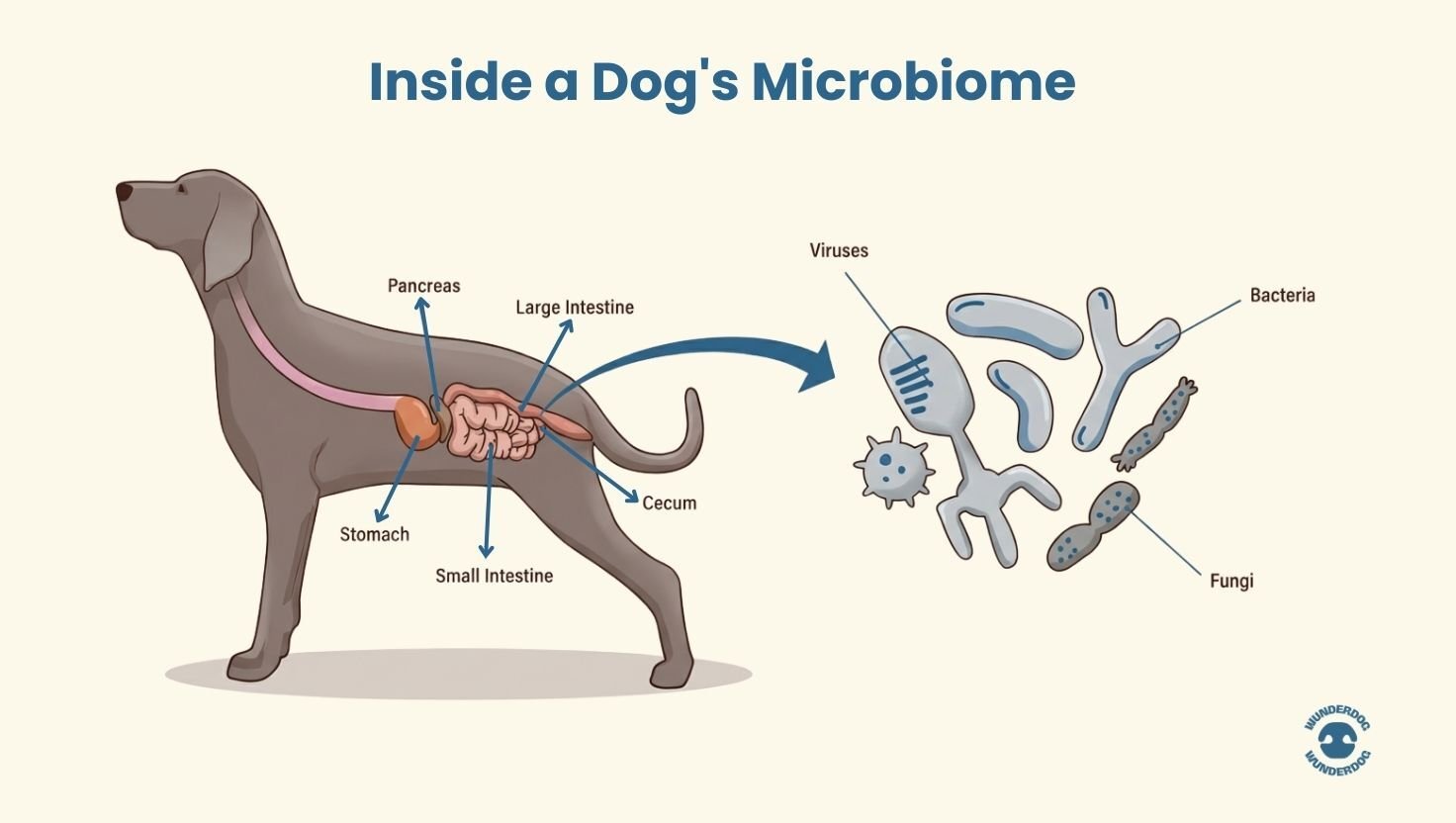
This system is so complex that it is often referred to as the “second brain.” Not because it thinks, but because it communicates constantly with the nervous system.
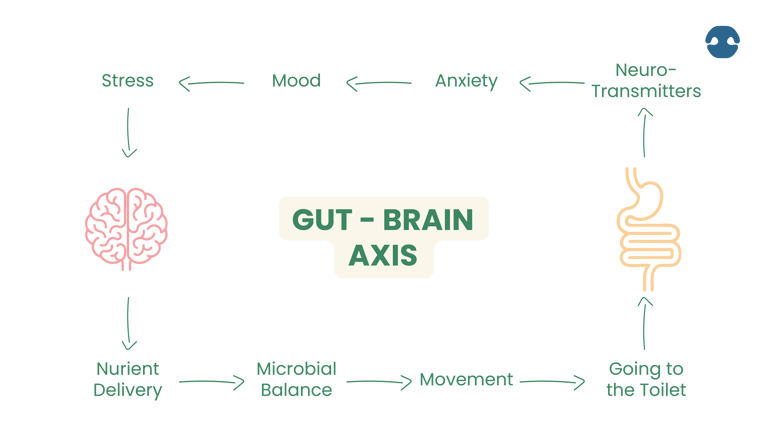
The gut and the brain are connected through what we call the gut brain axis.
This is a two way communication pathway involving the vagus nerve, immune signalling, hormones, and microbial metabolites.
Here is something most people do not realise.
Around 90% of serotonin, a neurotransmitter associated with mood regulation, is produced in the gut. That does not mean your dog’s emotions are controlled by food alone. But it does mean gut health influences behaviour more than we once believed.
Recent veterinary research has shown measurable links between changes in gut bacteria and anxiety-related behaviours in dogs. This is no longer speculation. It is observable physiology.
Let’s make this simple.
Healthy gut bacteria ferment dietary fibre and produce substances called short chain fatty acids. These compounds:
When the microbiome is balanced, the intestinal barrier stays strong. Immune activity remains regulated. Inflammatory signals are kept under control.
When the microbiome is disrupted, a state called dysbiosis, we may see:
I often see dogs with chronic loose stools who are also described as nervous or overly sensitive. When digestion stabilises, behaviour often improves alongside it.
It is not magic. It is physiology.
This is where the bowl truly meets the body.
Diet is one of the strongest modulators of the microbiome. Established veterinary nutrition guidelines such as NRC and WSAVA highlight how fibre type, protein source, fat quality, and moisture influence gut bacterial populations.
Highly processed, low-moisture diets may limit microbial diversity. In contrast, fresh, balanced diets that include natural fibre sources and varied proteins can support microbial diversity.
And diversity matters. A more diverse microbiome is generally associated with resilience.
This is why we prioritise fresh, vet-formulated nutrition at Wunderdog. Not because it is fashionable, but because microbial science supports it.
If you have read our article on Understanding Your Dog’s Digestive Health: When to Seek Help, you know that persistent soft stools are never “just sensitive.” They often signal microbial imbalance.
A three year old Labrador I saw recently had intermittent loose stools and escalating separation anxiety. Training had been adjusted. Routine was stable. No obvious triggers.
We focused first on digestive health.
We transitioned him gradually to a fresh, balanced, moderate fat recipe with appropriate soluble fibre support. Nothing dramatic. Just predictable meals, consistent timing, and no unnecessary toppers.
Within four weeks, stools normalised. His reactivity reduced. His owner said, “He seems calmer.”
Was it only the food? No.
But the gut was no longer sending stress signals to the brain.
That is the gut brain axis in action.
The gut brain connection does not exist in isolation.
About 70% of immune activity is associated with the gut. When dysbiosis occurs, immune responses can become exaggerated.
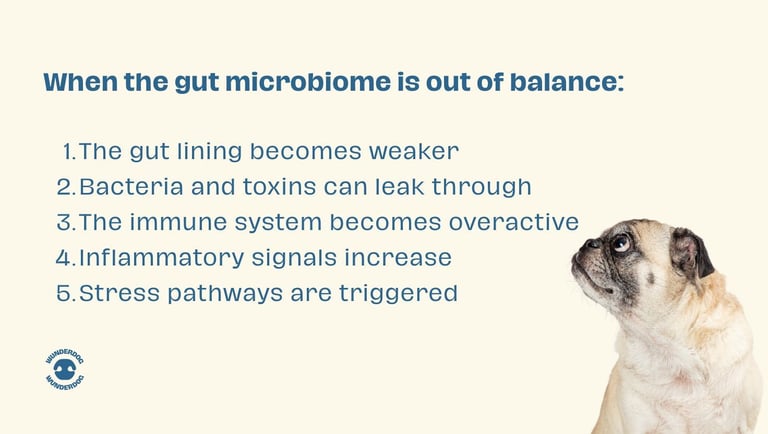
This is one reason digestive health often intersects with skin health. Nutrition plays a central role in inflammatory regulation. It is all connected.
Keep meals consistent. Dogs thrive on routine.
The microbiome revolution is not a trend. It is a shift in how we understand physiology.
We no longer see digestion as separate from mood. Or food as separate from mental wellbeing.
When parents tell me their dog feels “off,” I listen to the gut as much as the brain.
And this is why digestive health is such a foundational pillar of what we do at Wunderdog and within our Wundercare therapeutic range. Stabilise the gut, support the microbiome, reduce inflammatory noise. The rest of the body often follows.
If you are noticing changes in your dog’s digestion or behaviour, talk to your vet. Ask about diet. Ask about microbiome support.
And if you are unsure where to begin, reach out. We are here to guide you calmly and practically.
Because sometimes, supporting your dog’s mind starts in their bowl.