

Ready to experience the fresh food difference?*
Start with Wunderdog's Taster Pack and choose your favourites and select a Care Pack with recipes personalised to your dog's needs for just AED 75, with free delivery throughout the UAE.
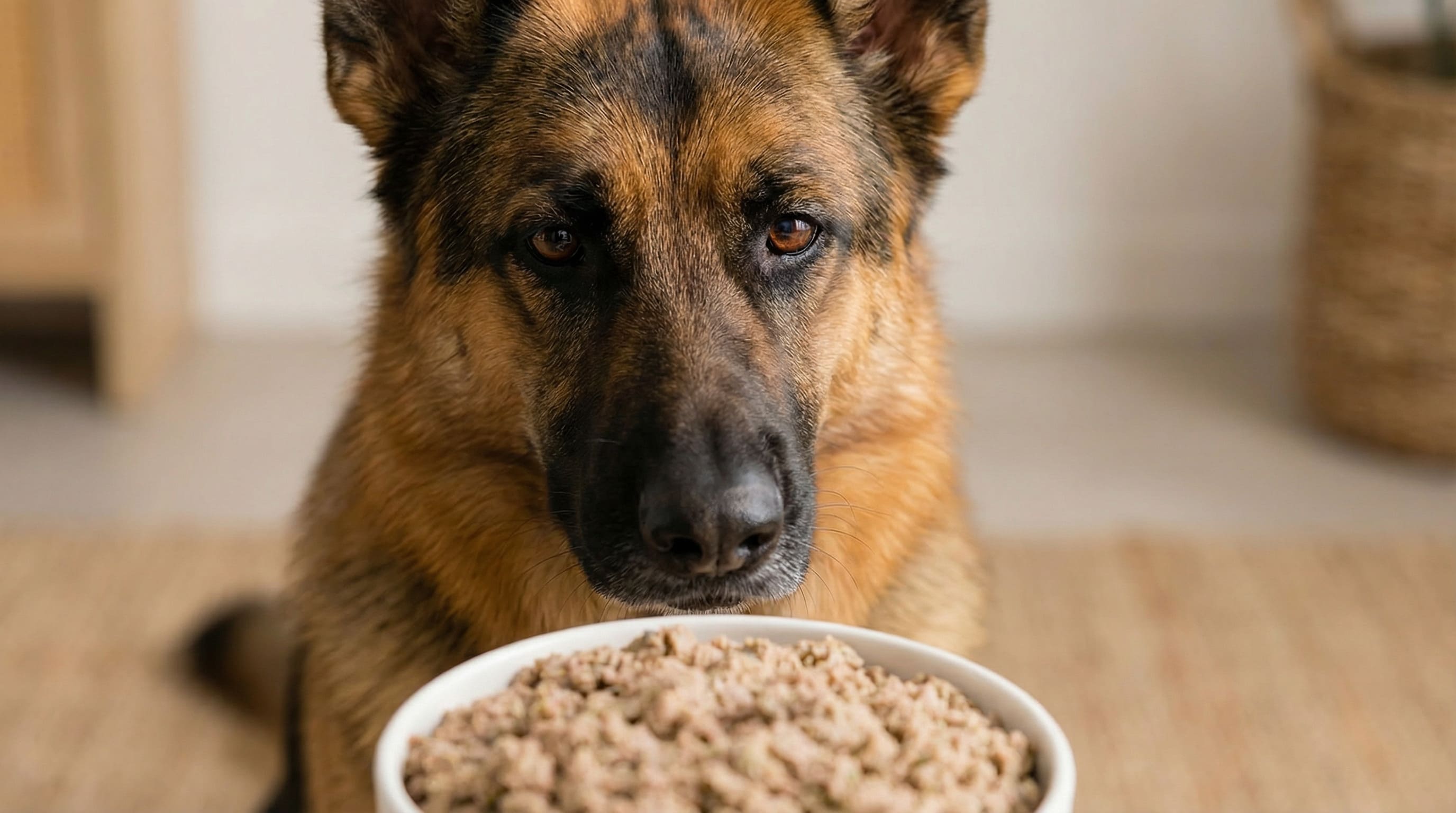

Choosing what to feed your dog feels like it should be simple. The label says complete nutrition. The vet says it's fine. But then you notice the itching, the inconsistent stools, the dull coat. And you start wondering.
You're not alone in asking that question. And the answer matters more than most dog owners realise.
Research from leading veterinary institutions now confirms what many pet parents observe first-hand: dogs fed fresh, gently cooked meals experience dramatically improved digestion, better nutrient absorption, healthier gut microbiomes, and wellness benefits that extend far beyond mealtime. For dogs navigating extreme heat, long hours in air conditioning, and unique environmental challenges, these advantages aren't just nice to have. They're essential.
Your dog's digestive system evolved over millennia processing whole prey and fresh foods. Not brown pellets extruded at industrial temperatures. Understanding this biological reality explains why what goes into the bowl matters so profoundly.
Dogs possess a stomach capacity of 80 to 90 mL per kilogram of body weight, designed for efficient breakdown of food through powerful gastric acids and enzymes. But here's what makes canine digestion remarkable: pancreatic enzymes actually adapt to diet composition. Lipase, protease, and amylase production adjusts over three-week periods based on what dogs regularly consume.
This means your dog's body is literally reshaping itself around the food you provide. The question is whether that adaptation serves their health or undermines it.
The final digestive stage occurs in the large intestine, where trillions of gut bacteria ferment fibre and produce short-chain fatty acids crucial for gut health, immune function, and even behaviour. This ecosystem doesn't merely extract nutrients. It actively shapes your dog's overall wellbeing, from skin condition to energy levels to disease resistance.
Kibble manufacturing revolutionised pet food convenience. But convenience came with hidden biological costs that most dog owners never see on the label.
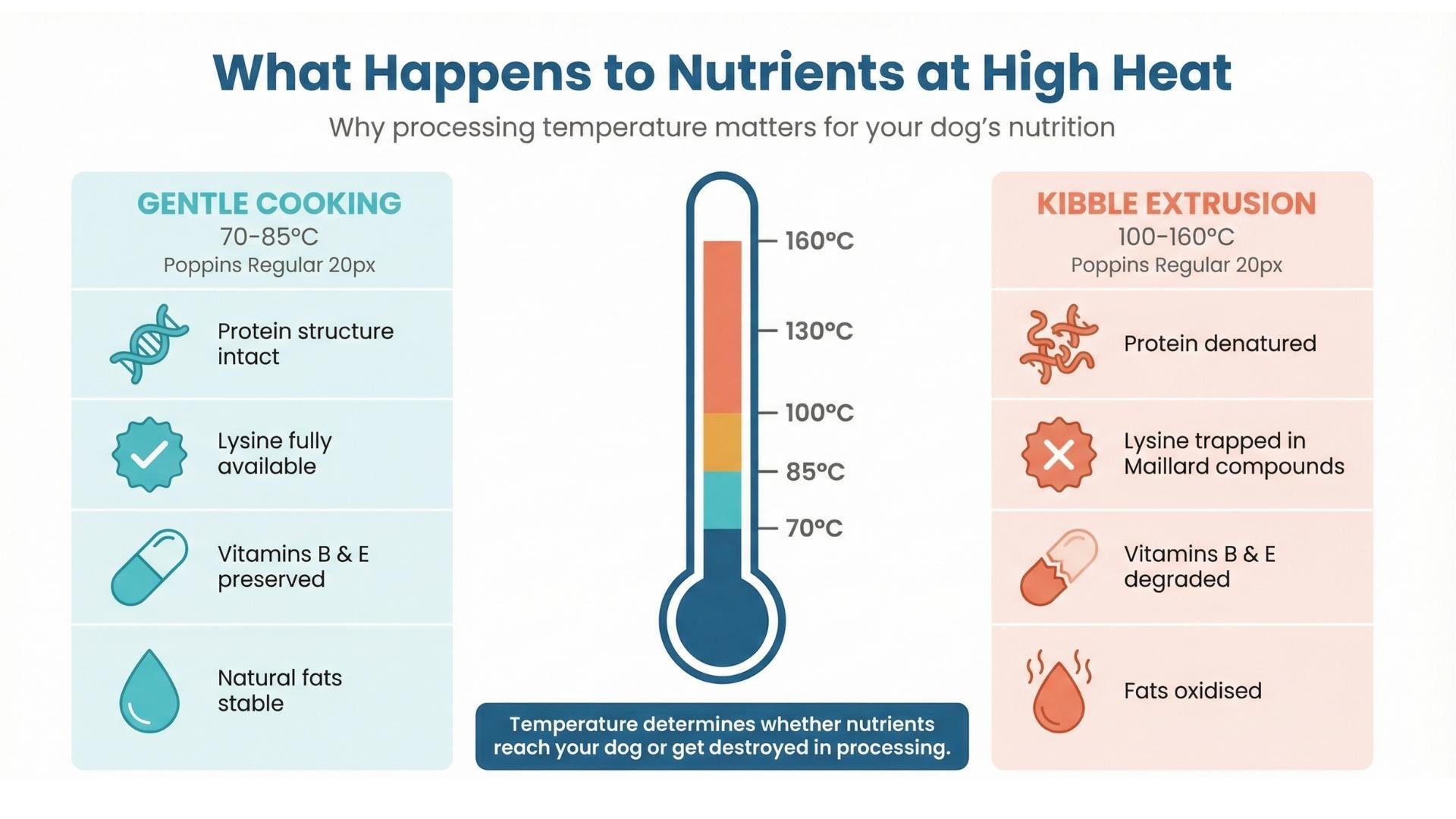
The extrusion process subjects ingredients to temperatures of 100 to 160°C, high pressure, and mechanical shearing that fundamentally alter nutritional structure. High heat triggers the Maillard reaction, where proteins bind with sugars to create appealing brown colours and roasted flavours. The problem? This same process reduces lysine digestibility and affects amino acid availability. Lysine, essential for tissue repair and immune function, becomes partially trapped in heat-generated complexes your dog's body struggles to access.
Research confirms the damage extends further: high barrel temperatures significantly decrease nutritional composition of extruded products, degrading heat-sensitive vitamins and altering protein structures. Manufacturers add synthetic vitamin premixes afterward, but these don't match the bioavailability of nutrients naturally present in whole foods.
Gently cooked fresh food takes a different approach entirely. Studies show that fresh deboned chicken provides the highest quality protein without requiring amino acid supplementation. The difference comes down to temperature control and cooking duration that achieve food safety without destroying nutritional integrity.
A year-long study examining serum metabolomics revealed distinct profiles between dogs fed fresh food versus kibble. Processing methods influence not just individual nutrients but entire metabolic pathways. These differences cascade into observable health changes: the brightness in your dog's eyes, the quality of their coat, their enthusiasm for play.
Have you considered how much your dog's food contributes to, or detracts from, their daily water intake?
Fresh dog food contains 65 to 75% moisture. Kibble contains roughly 10%. In a climate where dehydration can escalate quickly, this gap has profound consequences.
Water facilitates every digestive process: enzyme activity, nutrient transport, waste elimination, and gut barrier protection. Research demonstrates that dogs consuming fresh food (71% moisture) consumed significantly more total daily water, an additional 88 grams per day, translating to substantially better hydration status.
The numbers tell a compelling story. Fresh-fed dogs exceeded minimum water requirements by 141% versus 102% for kibble-fed dogs. That margin provides crucial reserves for kidney function, nutrient transport, joint lubrication, and temperature regulation.
For a dog living through a hot summer, moving between scorching outdoor walks and heavily air-conditioned interiors, this hydration buffer isn't a luxury. It's protection. Moisture-rich food creates softer, more processable stomach contents, reducing mechanical stress on the GI tract. Many vitamins and minerals dissolve in water, and their absorption depends on adequate intestinal fluid.
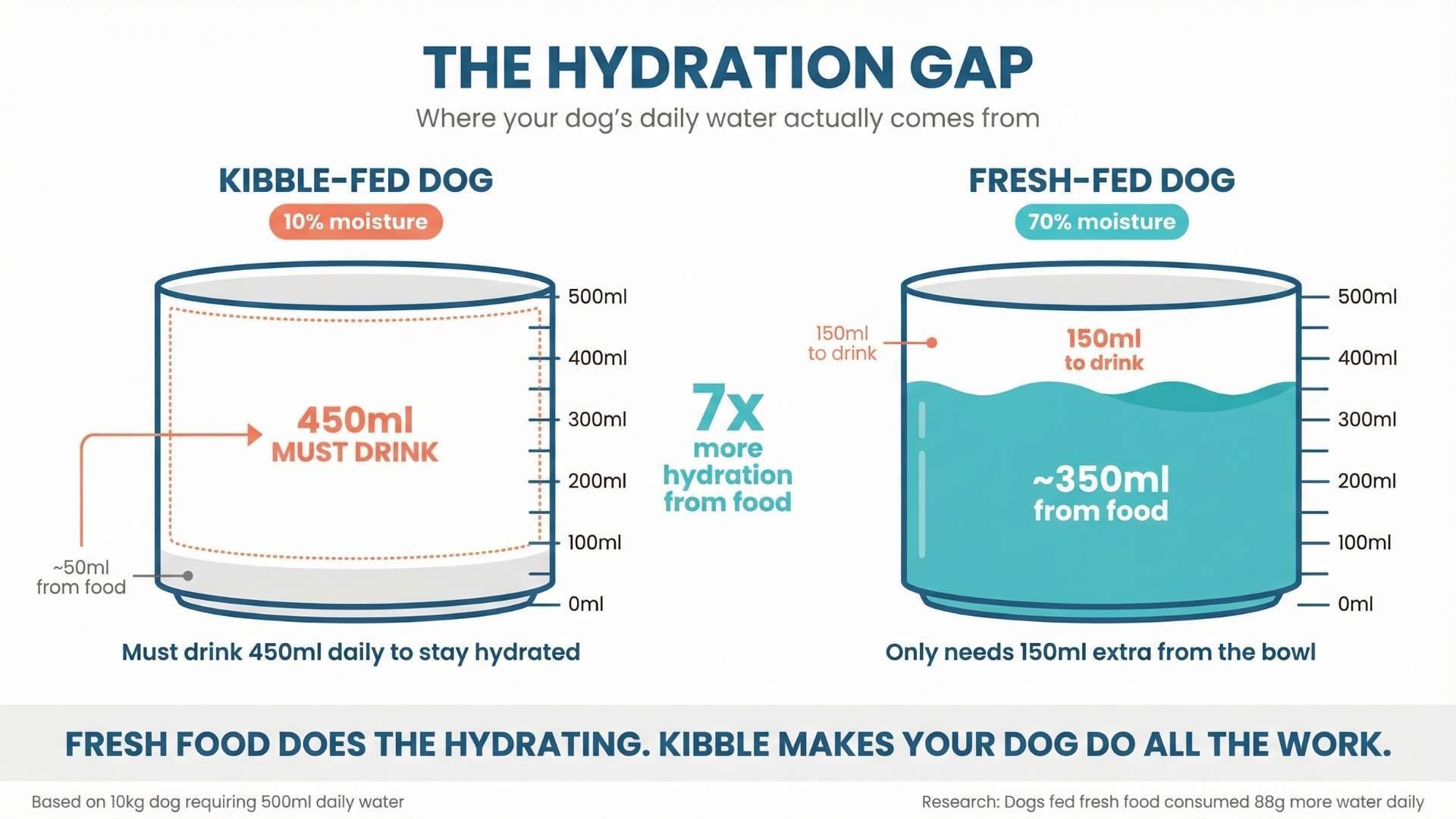
By embedding hydration directly into meals, fresh food ensures every bite contributes to your dog's total daily water intake. This proves especially valuable for dogs who don't voluntarily drink enough, a common issue when they spend long hours indoors away from their water bowl.
This also explains why dogs fed fresh food often stop begging between meals. The science behind canine satiety and hunger signals confirms that moisture content directly affects how long your dog feels genuinely full after eating.
You carefully measure portions, choose quality brands, and ensure your dog eats consistently. But what if a significant portion of those nutrients passes straight through without being absorbed?
Nutritional adequacy on a label tells only part of the story. What truly matters is bioavailability: the proportion of nutrients dogs actually digest, absorb, and utilise.
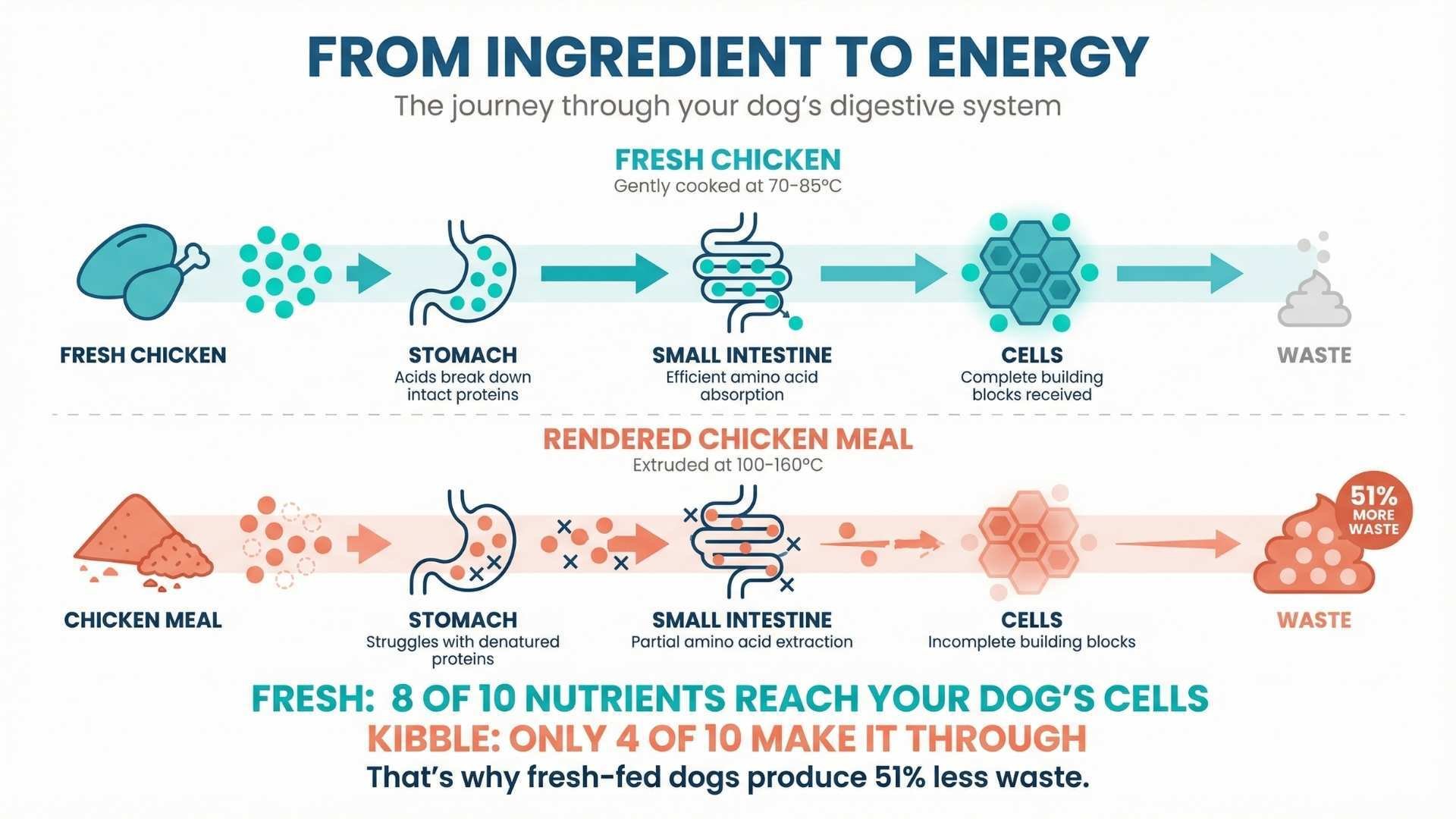
Fresh food demonstrates dramatically superior bioavailability. Comprehensive digestibility studies found that fresh diets showed 51% less fecal dry matter compared to kibble. Dogs absorb far more nutrition and excrete far less waste. The result? Smaller, firmer stools most owners notice within the first week.
Protein digestibility differences are particularly striking. Research using gold-standard rooster assays found that [all fresh diet formats showed higher amino acid digestibility and greater metabolizable energy values than extruded kibble. Fresh proteins break down more completely into amino acids and absorb more efficiently, providing superior building blocks for muscle maintenance, immune function, and tissue repair.
The efficiency gains are measurable. Studies documented that dogs fed fresh diets showed lower defecation frequency (1.2 vs. 1.7 times daily) and lower fecal calorie content (92 vs. 189 kcal/day. More calories absorbed means more nutrition fuelling your dog's body rather than being wasted.
Mineral bioavailability also improves with whole foods. Research shows that organic mineral forms more effectively enhance immune function than inorganic forms. The naturally occurring chelated minerals in fresh liver or meat may be more bioavailable than synthetic minerals sprayed onto kibble after processing.
There's biological wisdom in feeding dogs recognisable food: chicken breast, lamb liver, pumpkin, sweet potato. Your dog's digestive system evolved processing whole foods, possessing sophisticated mechanisms for extracting nutrition from intact food matrices. These mechanisms don't translate well to highly processed ingredient slurries.
Research confirms ingredient quality matters. Studies found that fresh mechanically deboned meat showed significantly higher nutritional value and digestibility compared to meat by-products common in kibble. Fresh meat retains natural structure, fat distribution, and micronutrient content. By-products undergo rendering that denatures proteins, oxidizes fats, and degrades heat-sensitive nutrients.
With Wunderdog that include, for example, pumpkin, you're providing not just beta-carotene and fibre but hundreds of phytochemicals, enzymes, and co-factors that work synergistically. Pumpkin's soluble fibre regulates both diarrhoea and constipation, a benefit explained by whole food fibre providing both bulk and moisture-binding capacity simultaneously.
Animal organs deserve special mention. Liver serves as nature's multivitamin, providing extraordinarily high concentrations of vitamin A, B-complex vitamins, iron, copper, and selenium in forms that far exceed synthetic supplementation in bioavailability. The B12 in fresh liver arrives bound to transport proteins that facilitate absorption. Synthetic B12 added to kibble must first bind with intrinsic factor in the stomach, a less efficient process.
Research examining plant-based phytonutrients in canine nutrition highlights benefits of polyphenols, carotenoids, and bioactive compounds in fresh vegetables and fruits. These compounds possess antioxidant and anti-inflammatory properties supporting immune function. Yet many are heat-sensitive and destroyed during high-temperature processing. They're largely absent from kibble even when vegetables appear on ingredient lists.
For dogs with recurring digestive upset, the right fibre sources can transform gut health within weeks. Persistent symptoms like chronic loose stools, vomiting, or unexplained weight loss, however, may indicate when digestive issues signal something more serious requiring veterinary attention.
Comprehensive research confirms that human-grade pet foods were highly digestible with reduced fecal output and healthy blood parameters while remaining safe and well-tolerated. Real ingredients, minimally processed, simply perform better in dogs' bodies.
Persistent itching. Recurring ear infections. Unexplained digestive flare-ups. If your dog struggles with these issues, you understand the frustration of trying treatment after treatment without lasting relief. Chronic low-grade inflammation might be the hidden factor, and it represents one of modern dogs' most insidious health challenges.
Inflammation contributes to allergies, arthritis, inflammatory bowel disease, and even cancer. Diet profoundly influences inflammatory status, and research demonstrates fresh diets substantially reduce inflammatory markers.
Landmark studies found that dogs fed whole food diets showed significantly lower inflammatory markers: reduced C-reactive protein, haptoglobin, TNF-α, and IL-6. These improvements occurred in healthy dogs, suggesting dietary impact on inflammation is preventive, not merely therapeutic. Fresh food reduces baseline inflammation that otherwise accumulates silently, setting the stage for chronic disease.
The same research found whole food diets improved immune cell function, specifically enhancing phagocytosis (white blood cells' ability to destroy pathogens) and oxidative burst capacity. This dual benefit, reduced inappropriate inflammation alongside enhanced appropriate immune response, represents optimal immune balance.
Many dogs develop sensitivities to proteins they've consumed for years, particularly those altered by extreme processing. Persistent itching, digestive upset, or recurring ear infections are often the first signs of food allergies and sensitivities that dietary changes can resolve.
Gene expression analysis reveals how deeply diet affects the body. Studies examining dogs fed human-grade diets found decreased expression of inflammatory genes including SOD and TNF-α, indicating dietary impact reaches cellular function, altering which genes activate. The same study documented skin health improvements, including reduced trans epidermal water loss, suggesting reduced systemic inflammation translated into better tissue integrity.
The GI tract benefits directly. Research documented that fresh-frozen diets significantly improved fecal consistency scores compared to kibble, indicating better intestinal function and reduced gut lining irritation.
Fresh food provides active anti-inflammatory support through improved digestibility, beneficial microbiome shifts, antioxidant phytonutrients, and balanced omega-3 fatty acids.
Transitioning to fresh food requires thoughtful progression, allowing digestive enzymes and gut microbiome to adapt. Patience during this phase sets the foundation for long-term success.
Veterinary nutritionists recommend a gradual 7 to 14 day transition.
Research confirms that fecal microbiota composition shows rapid shifts within 3 to 6 days of dietary changes, then stabilises, explaining why the first week proves most critical. Temporary stool softening is normal as gut bacteria populations adjust. This typically resolves within a few days.
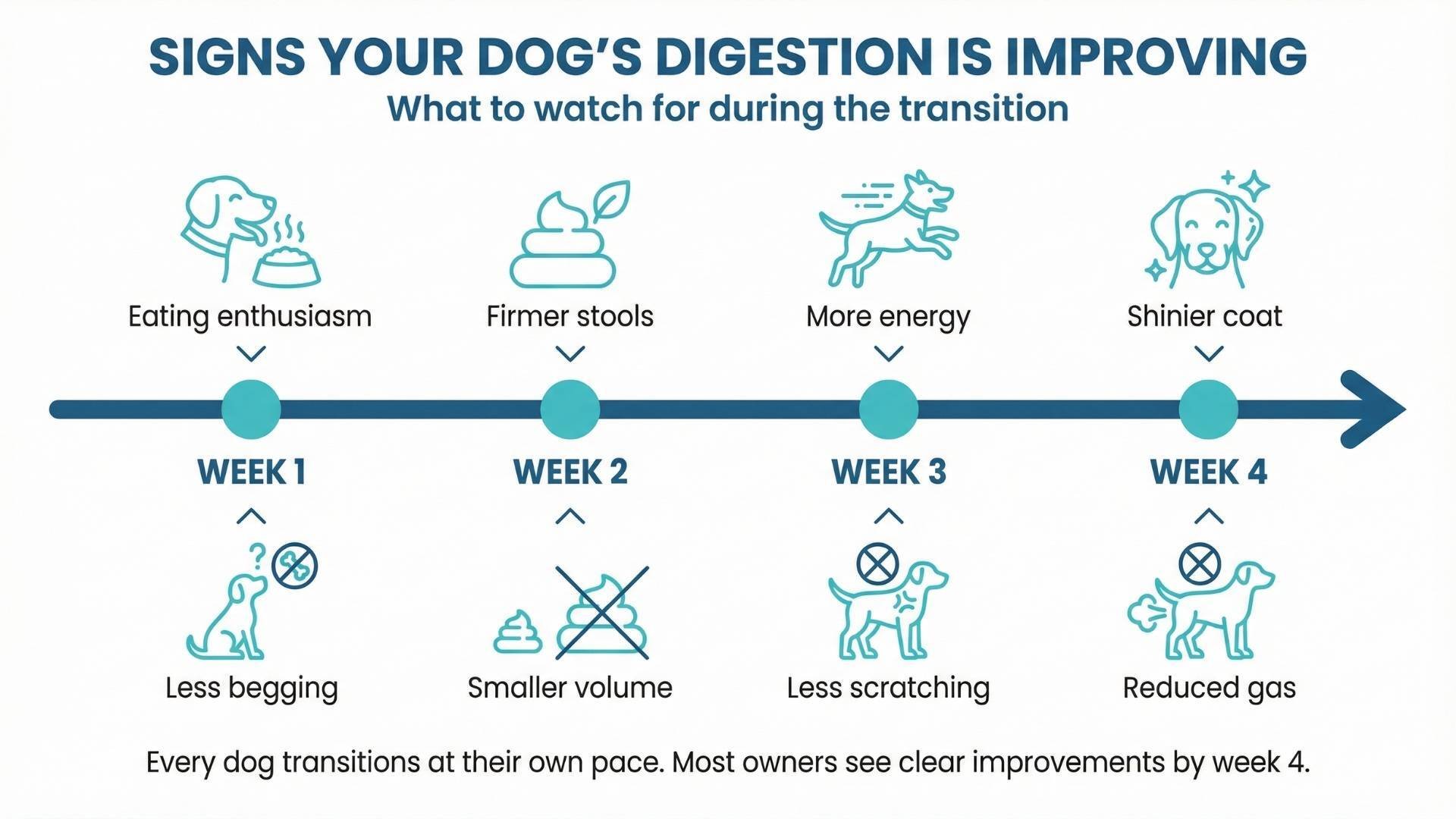
Research confirms significant improvements in skin health measures including reduced water loss by week 12, indicating systemic nutritional improvements manifesting in tissue quality. Studies also show that fresh diets improved wellbeing and reduced symptoms, including complete remission in some cases where dogs had previously struggled with chronic conditions.
For dogs in the UAE, where limited outdoor exercise during summer months compounds dietary challenges, the transition to fresh food often produces noticeable results within weeks. Our practical guide to weight management for UAE dog owners covers specific strategies for maintaining healthy weight year-round.
If your dog has existing health conditions affecting the GI system, kidneys, liver, or pancreas, consult your veterinarian before transitioning. Our Wundercare therapeutic range, formulated by veterinary nutritionists, offer recipes for specific conditions, allowing dogs with health challenges to experience fresh food benefits within medically appropriate frameworks.
Improved digestion represents the most immediate benefit. But the true value extends into longevity, disease resistance, and quality of life. Superior nutrition compounds across months and years into meaningful differences.
Dogs consuming fresh diets may live up to three years longer than those fed conventional food. Three more years of morning walks, beach outings in cooler months, quiet evenings together at home. This extended lifespan stems from better nutrient absorption, reduced chronic inflammation, and lower disease incidence throughout life.
Better nutrient absorption also supports healthy weight management. With over half of dogs now classified as overweight, the real factors behind canine obesity often trace back to nutrient-poor diets that leave dogs perpetually hungry despite adequate calories.
Fresh food's higher protein content, moisture density, and nutrient bioavailability naturally support healthy weight by promoting satiety and providing complete nutrition in appropriate volumes. Dogs maintain ideal body condition without aggressive portion restriction. This becomes especially valuable when outdoor exercise may be limited during extreme summer heat.
Cancer prevention represents another significant benefit. Scottish Terrier research demonstrated that vegetables consumed at least three times weekly reduce bladder cancer risk by up to 70%. The protective effects of phytonutrients in fresh produce reduce free radical damage and support detoxification pathways.
Senior dogs benefit from better omega-3 intake supporting brain cell membranes, antioxidants reducing neuronal damage, and improved gut microbiome influencing the gut-brain axis. These factors help dogs remain engaged and emotionally connected throughout their senior years. Anti-inflammatory properties and optimal nutrition support joint structures, reduce osteoarthritis pain, preserve muscle mass, and maintain bone health through superior calcium, phosphorus, and vitamin D nutrition.
For families whose dogs are cherished companions through significant life transitions, these benefits represent an investment in preserving your dog's health, vitality, and presence across their entire lifespan.
The transition to fresh food represents more than dietary change. It's a shift from preventing deficiency to optimizing wellness. From convenient feeding to intentional nourishment. The digestive benefits you'll notice first are simply the visible edge of deeper improvements supporting every cell, organ, and system in your dog's body.