


Functional Toppers
Puppy Training
Puppy Stage


There’s an old saying in medicine: food is medicine. It sounds poetic. Slightly dramatic. Maybe even a bit trendy. But in veterinary medicine, it’s not dramatic at all. It’s practical.
When a dog is diagnosed with kidney disease, liver stress, pancreatitis, or heart disease, one of the first things we talk about isn’t just medication. It’s the bowl. Because in many chronic conditions, what goes into the bowl every single day influences how the body copes, repairs, and stabilises.
That’s where therapeutic dog food comes in. Not as a marketing term. As a clinical tool.
So what is therapeutic dog food?
Simply put, it’s a veterinary therapeutic diet designed to support a specific medical condition by modifying key nutrients. It’s not just “premium” food. It’s not just “natural.” It’s not just higher protein or grain free.
It’s condition-specific nutrition.
A therapeutic diet for dogs is formulated differently because the body is functioning differently. When kidneys struggle, when the pancreas is inflamed, when the liver is overloaded, the nutritional priorities change.
That’s what separates a regular balanced diet from medical nutrition for dogs.
If you’ve read our article on “Personalised Dog Nutrition in the UAE: Why One Size Doesn’t Fit All,” this is essentially that concept taken a step further. Not just personalisation for lifestyle, but precision for disease.
When we talk about prescription dog food or prescription diet alternatives, we’re really talking about nutrient modification.
We adjust protein levels, phosphorus content, sodium, fat, fibre, or specific micronutrients depending on what the body needs less of and what it needs more of.
This is not guesswork. It’s based on decades of veterinary nutrition research, including NRC guidelines and clinical studies published in peer-reviewed journals.
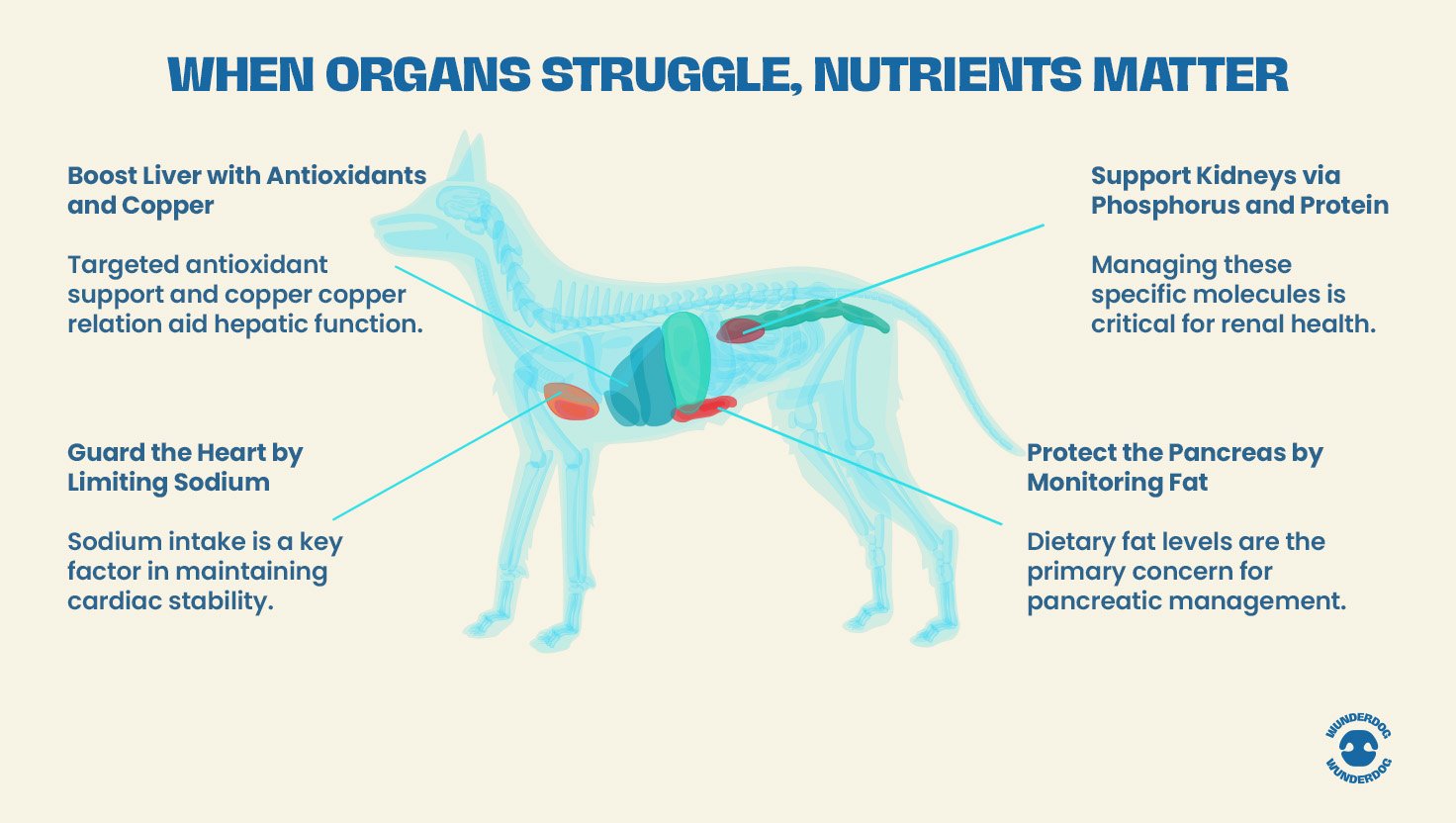
For example, in chronic kidney disease, excessive phosphorus accelerates kidney damage. In pancreatitis, dietary fat stimulates pancreatic enzyme release, which can worsen inflammation. In cardiac disease, sodium influences fluid retention and blood pressure regulation.
The diet becomes part of the treatment plan.
That's when food stops being just food.
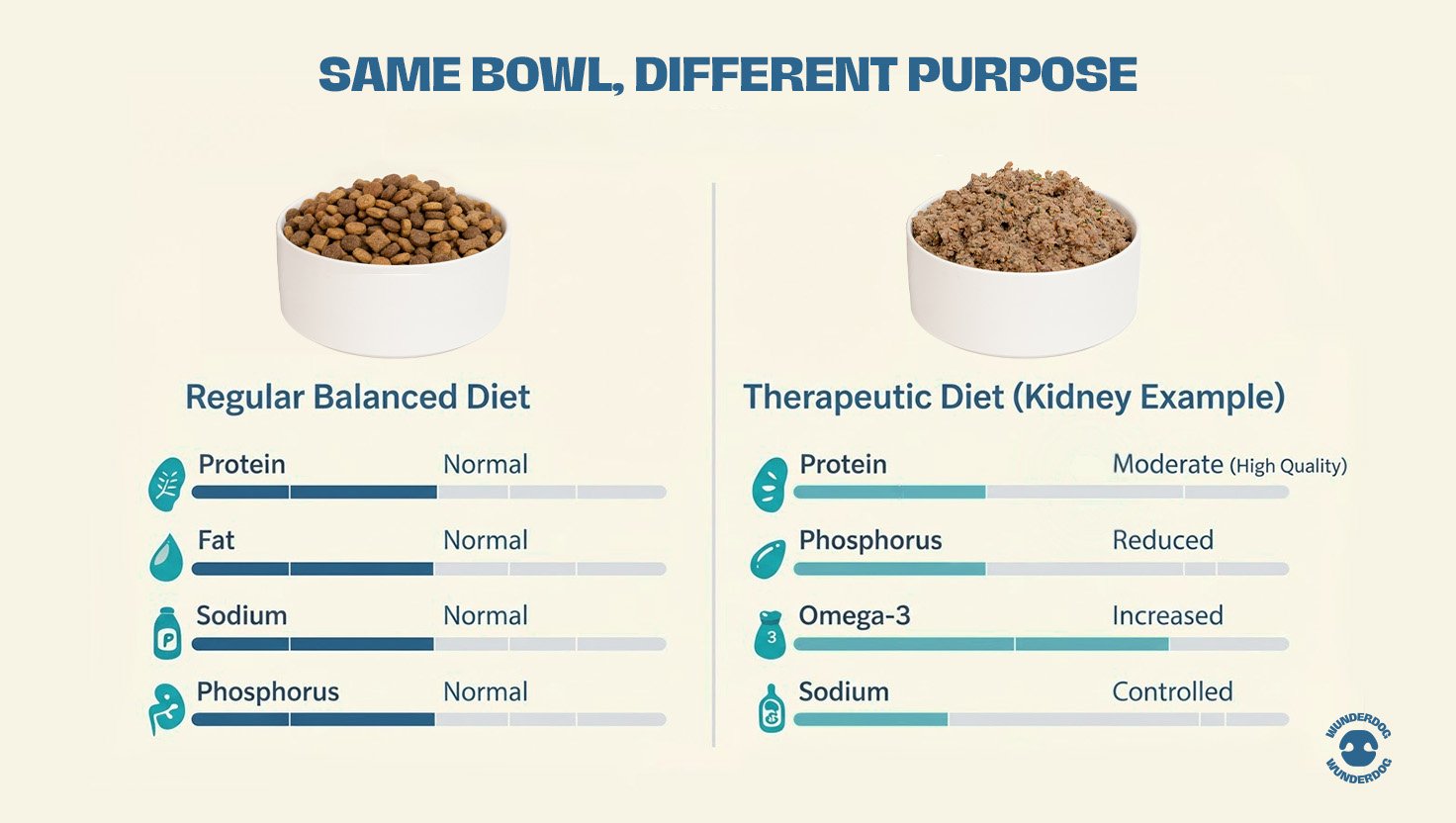
Not every health issue requires a therapeutic diet. But certain conditions respond significantly to nutritional adjustment.
Kidney disease is one of the clearest examples. A carefully formulated therapeutic diet for dog kidney disease focuses on high-quality, moderate protein and controlled phosphorus. The goal is not to “starve” protein, but to reduce nitrogen waste while preserving muscle mass.
Liver disease often requires a different approach. We modify protein type, reduce copper when needed, and ensure adequate antioxidants to support detoxification pathways.
Pancreatic disease, especially recurrent pancreatitis, requires strict fat management. If you’ve read “Low-Fat Diets for Dogs: Managing Pancreatitis and Fat Sensitivity,” you already know that fat tolerance matters more than calorie counting in these cases.
Cardiac conditions benefit from sodium control and specific nutrient support to help manage fluid balance and preserve muscle.
And sometimes, therapeutic nutrition plays a role in weight-related disease as well. Chronic inflammation and obesity are closely linked, something we discussed in “The Truth About Dog Obesity: A Vet’s Perspective on Weight.”
The common thread? Precision.
Many dog parents ask me, “How does prescription dog food work?”
The answer is simple, but powerful.
It works because disease changes physiology. And physiology changes nutritional needs.
A dog with kidney disease cannot process phosphorus the same way a healthy dog can. A dog with pancreatitis does not tolerate fat the way another dog might. A dog with cardiac disease handles sodium differently.
When we adjust those nutrients strategically, we reduce metabolic stress on the affected organ. Over time, that can slow progression, reduce flare-ups, and improve quality of life.
It’s not magic. It’s biochemistry.
And just as we discussed in “Understanding Your Dog’s Digestive Health: When to Seek Help,” the digestive system is often the first place where nutrient imbalances show up. The gut tells the story early.
Kidney support isn’t about eliminating protein. That’s a common misconception.
It’s about protein quality and phosphorus control.
High-biological-value proteins produce fewer waste byproducts. Controlled phosphorus intake helps slow further kidney damage. Omega-3 fatty acids may reduce inflammatory processes within renal tissue.
This is why therapeutic kidney diets are carefully calculated, not randomly reduced.
The liver and pancreas are deeply influenced by fat metabolism.
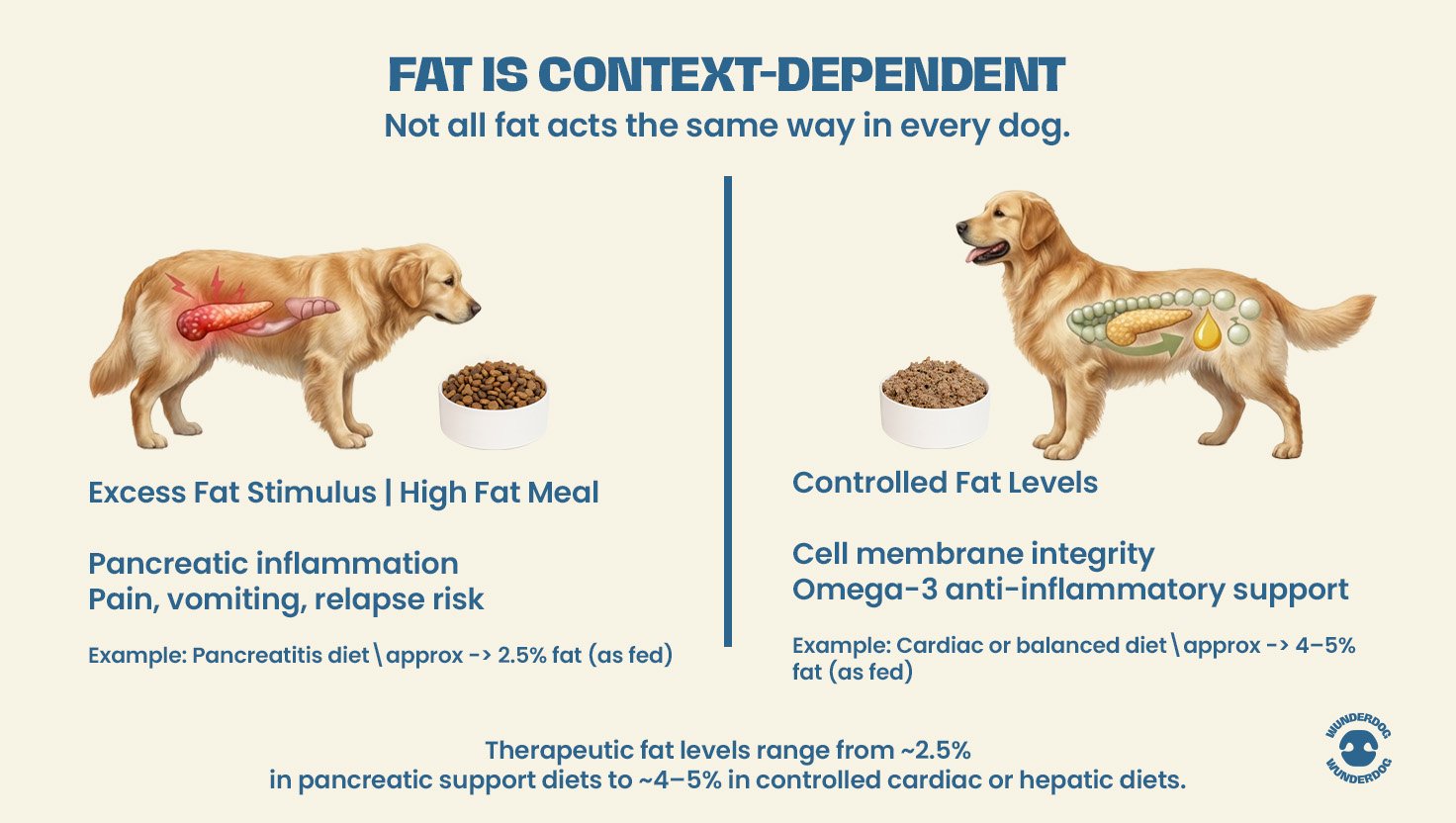
In pancreatitis, dietary fat stimulates enzyme secretion, which can worsen inflammation. That’s why ultra-low-fat therapeutic diets are often required during active or recurrent disease.
In liver disease, fat modification may also be necessary, depending on the type of hepatic dysfunction present.
We explored this concept of fat misunderstanding more broadly in “Omega-3s for Dogs: Why Fat Isn’t the Enemy.” Not all fats are harmful. In fact, some are essential. It’s about balance and context. Therapeutic nutrition is always about context.
Therapeutic dog food should never be chosen casually. It should be part of a coordinated plan between you and your veterinarian. Bloodwork, imaging, clinical signs, body condition, appetite, and lifestyle all matter. Sometimes a therapeutic diet is temporary. Sometimes it’s lifelong.
At Wunderdog, our Wundercare range was built around this principle. Condition-specific dog food formulated with veterinary oversight, aligned with NRC standards, designed to support kidney, liver, pancreatic, cardiac, and digestive health. Not to replace medical treatment. To support it.
If your dog has:
Chronic kidney disease
Liver dysfunction
Recurrent pancreatitis
Cardiac disease
Severe digestive sensitivity
Nutrition is no longer optional background support. It becomes part of the medical strategy.
That doesn’t mean every diagnosis requires a prescription diet. But when nutrient modification can reduce organ stress, ignoring it would be a missed opportunity.
Food becomes medicine when the body needs help.
It’s not about trends. It’s not about labels. It’s about understanding that different diseases change the way the body processes nutrients. When that happens, the bowl matters more than ever.
If your dog has been diagnosed with a health condition and you’re unsure whether therapeutic nutrition is appropriate, speak with your vet. Ask questions. Understand the why. And if you’d like to explore how precision nutrition might support your dog, take a look at our Wundercare therapeutic range.
Because sometimes, the most powerful medicine doesn’t come in a pill.
It comes in a bowl.