Most dog owners know protein matters. It builds muscle, supports immunity, keeps the coat healthy. But there is a part of the story that rarely makes it onto a food label: not all protein is created equal, and your dog's body needs specific building blocks from that protein every single day.
Those building blocks are called amino acids. And depending on what your dog is eating, they may be getting all of them, or quietly falling short on one or two without any obvious signs, at least not right away.
Collection of Smaller Pieces
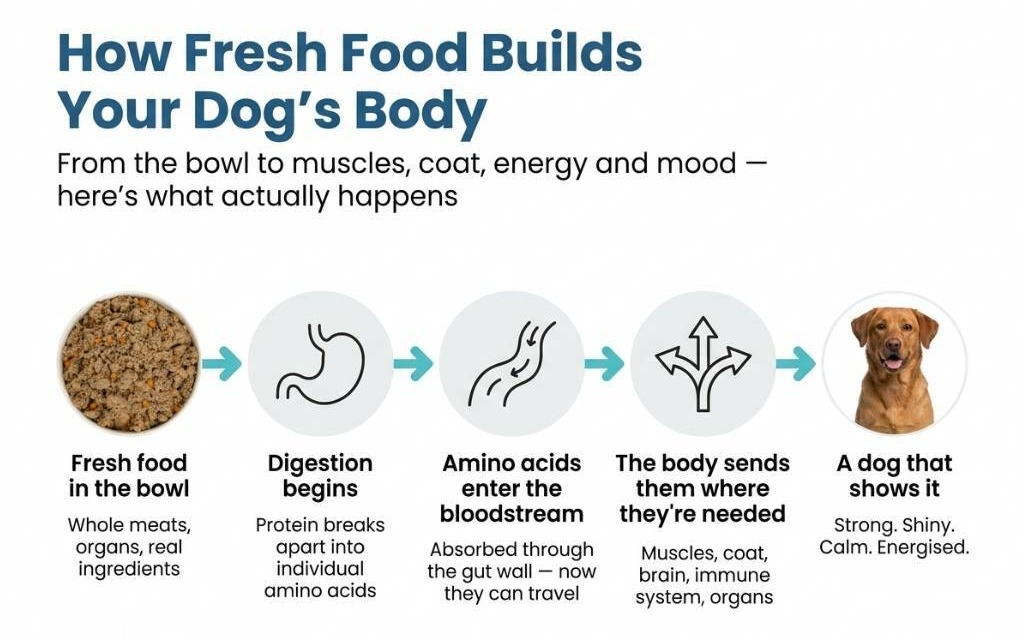
When your dog eats protein, their digestive system breaks it down into individual amino acid molecules. Think of protein as a long necklace and amino acids as the individual beads. The body then reassembles those beads into whatever it needs: muscle tissue, enzymes, hormones, antibodies, the coating around nerve cells, even the neurotransmitters that affect how settled and calm your dog feels.
Some amino acids can be made inside the body. Others cannot. The ones that must come from food are called essential amino acids, and there are ten of them that dogs need every day.
The 10 Essential Amino Acids Dogs Cannot Live Without
According to the Merck Veterinary Manual, these ten must come from your dog's diet because the body either cannot produce them at all or cannot produce enough of them on its own:
- Arginine
- Histidine
- Isoleucine
- Leucine
- Lysine
- Methionine
- Phenylalanine
- Threonine
- Tryptophan
- Valine
A protein source that contains all ten in adequate amounts is called a "complete" protein. Animal proteins, whole meats, organ meats, eggs, and fish, are naturally complete. They contain all ten in ratios that closely match what a dog's body needs.
What These Amino Acids Actually Do
You do not need to memorise the list. But it helps to understand a few of the standout players, because their roles explain why the quality of protein matters so much more than just the quantity.
Leucine, isoleucine, and valine: the muscle team
These three, known as branched-chain amino acids, are the ones muscle tissue relies on most directly for repair and energy. For an active dog in the UAE heat, or an older dog trying to maintain muscle tone, these are working hardest in the background.
Lysine: the one most easily lost in processing
Lysine is essential for tissue repair, immune function, and calcium absorption. It is also the amino acid most vulnerable to damage when food is cooked at high temperatures under pressure, which is exactly what happens during kibble production. A bag of kibble can show a solid protein percentage on the label while delivering meaningfully less usable lysine than the number suggests. We will come back to why.
Tryptophan: more than just muscle
Tryptophan is the precursor to serotonin, the neurotransmitter associated with calm, stable mood and healthy sleep patterns. Research published in Nutrition Research Reviews has found measurable links between dietary tryptophan availability and canine behaviour. What your dog eats genuinely affects how they feel — and tryptophan is one of the reasons why.
Methionine: skin, coat, and antioxidant defence
Methionine is a sulphur-containing amino acid that supports skin barrier health, coat quality, and the body's natural antioxidant processes. Dogs with a dull or brittle coat are sometimes showing early signs that their sulphur amino acid intake needs attention, though a vet visit is always the right first step.
Arginine: keeping the system clean
Arginine helps the body eliminate ammonia, a toxic byproduct of protein metabolism. Dogs have a limited ability to produce arginine themselves, so dietary supply matters more than it might in some other species.
Why the Label Does Not Tell the Whole Story
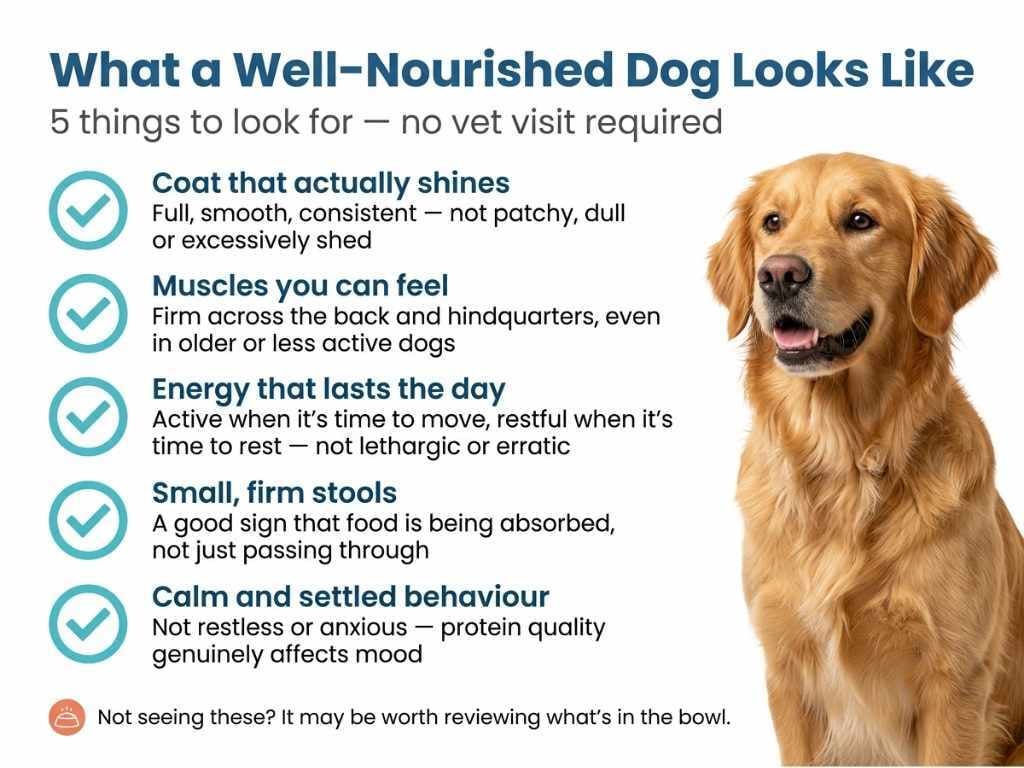
Here is something worth knowing. A food can contain adequate protein on paper and still deliver less of what your dog's body needs, depending on how it was processed. There are signs that show up in your dog's daily life when this is happening — often long before any formal diagnosis.
Fresh, gently cooked food made from whole meats and organ meats does not go through this process. The proteins stay structurally intact. Your dog's body can actually use what it is given.
Variety Also Plays a Role
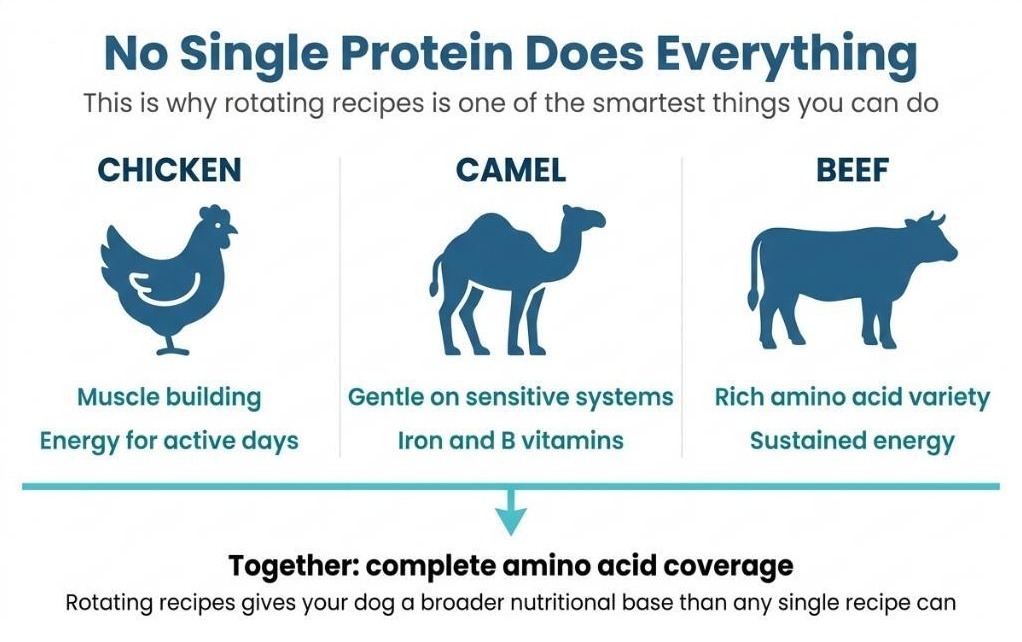
Different proteins have slightly different amino acid profiles. Chicken and camel are not identical in their composition. Turkey differs from beef. Rotating across protein sources over the course of the week means your dog draws from a broader nutritional base, reducing the risk that any single gap goes unaddressed over time.
This is part of why Wunderdog builds a portfolio of genuinely different recipes rather than minor variations on the same formula. Rotating through Turkey with Quinoa, Beef with Beetroot, and Camel with Dates is not just variety. It is nutritional strategy. Novel proteins like camel bring a distinct amino acid composition alongside micronutrients that more common proteins do not always deliver in the same concentrations.
Common Questions
My dog eats well and looks healthy. Does any of this really matter?
If your dog has good muscle tone, a shiny coat, consistent energy, and small firm stools, their protein nutrition is likely in a good place. This article is more useful when something feels slightly off and you are not sure where to start looking. Nutrition is rarely the only factor, but it is often the most overlooked one.
Why does my dog's poop change when I switch to fresh food?
Smaller, firmer stools are one of the first things owners notice. It is a sign that more of the food is being absorbed rather than passing through unused. Fresh, gently cooked food is significantly more digestible than heavily processed alternatives, so your dog's body extracts more from every meal.
How much protein does my dog actually need?
It depends on age, size, and activity level, but the quality of the protein matters as much as the quantity. A diet with slightly less protein from a highly digestible source can outperform a higher-protein diet where much of it is bound up in a form the body cannot use. If you are unsure what is right for your dog specifically, Dr. George offers free nutrition consultations and can give you a direct answer based on your dog's profile.
The Short Version
Your dog needs ten essential amino acids from their food every day. Animal protein from whole meats delivers all ten in a form the body can actually use. Processing destroys some of that availability, which is why what the label says and what your dog absorbs are not always the same number.
If you are not sure whether your dog's current diet is covering everything it should, Dr. George, Wunderdog's in-house veterinarian, offers free nutrition consultations. It is a straightforward conversation and often a genuinely useful one.