


Functional Toppers
Puppy Training
Puppy Stage
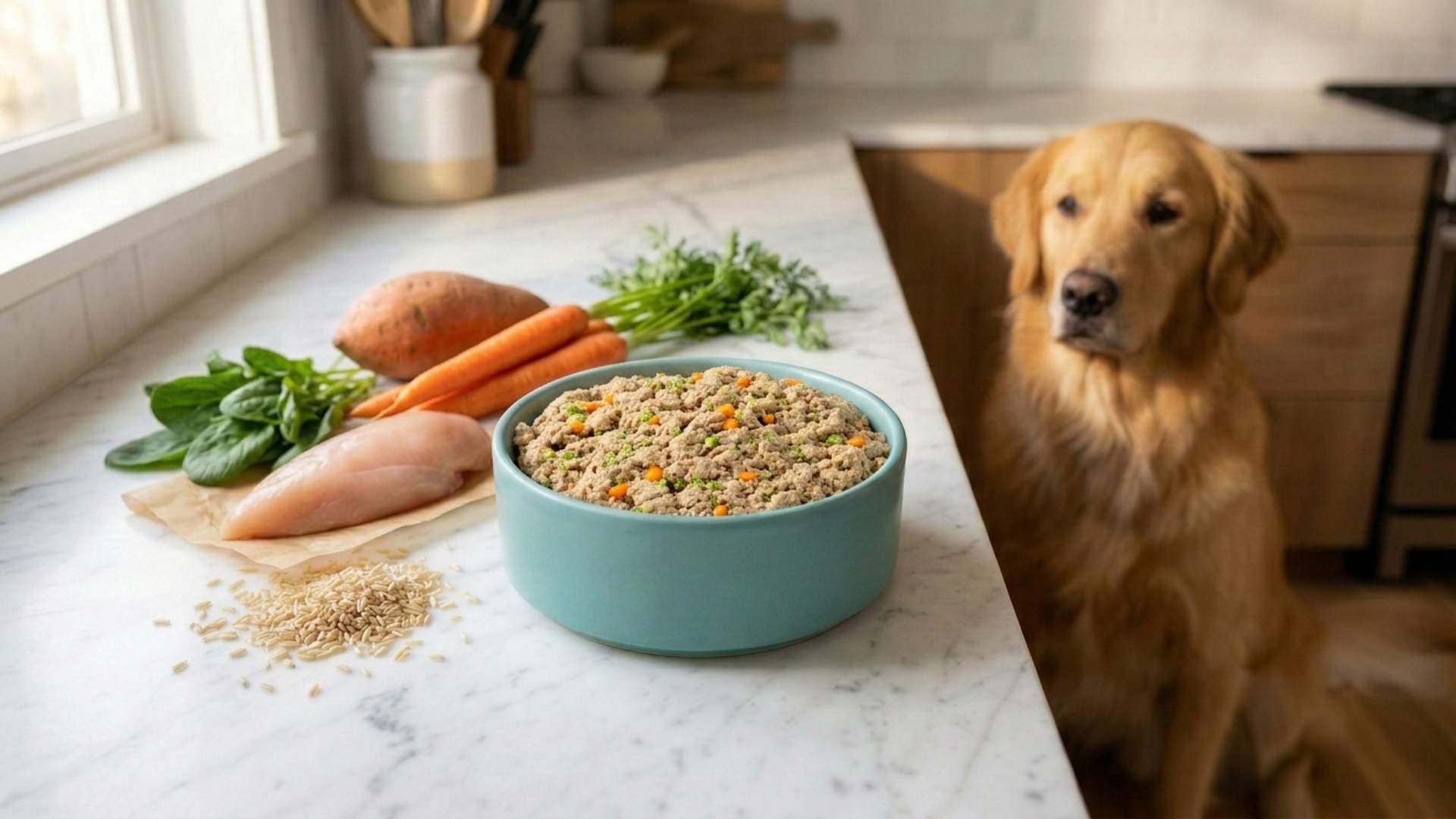

You have compared ingredient lists, read reviews, and tried to make sense of labels that feel designed more for marketing than clarity. And still, that nagging question remains: how do you actually know what is in your dog’s bowl?
If you shop for dog food in the UAE, the vast majority of what you find has been imported from the United States, Europe, or further afield, each with its own regulatory framework. One phrase keeps appearing across the most premium brands regardless of origin: “human grade.” It sounds reassuring. But what does it actually mean?
The answer depends partly on where the food was made. In the US, “human grade” has a formal definition in pet food law under AAFCO. In Europe, FEDIAF sets equivalent nutritional and safety standards. Local producers in the UAE, like Wunderdog, fall under Dubai Municipality and its Public Health Services division. The principle across all three is the same: ingredients fit for human consumption, produced under documented food safety controls. Among human grade options, gently cooked diets are the most studied, with controlled trials showing measurable effects on digestibility and the gut microbiome.
Because US brands dominate global pet food exports, AAFCO’s definition is the most widely referenced. Under that standard, “human grade” is a regulated claim: every ingredient must be legally edible for people, the finished product must be made, stored, and transported according to human food regulations, and the claim applies to the complete product, not to isolated ingredients. A truly human grade dog food could legally be sold as food for people, even though the recipe is tailored to dogs.
So if the standard carries real weight across multiple regulatory systems, why do so many labels still use the term so loosely?
Most traditional kibbles are produced with feed grade ingredients that are safe for animals but do not meet the "edible for humans" standard. Feed grade ingredients may include parts not normally sold as food for people. Human grade ingredients must be human edible when they enter the kitchen. Feed grade foods are made in animal feed plants, while human grade products must be made in facilities that meet human food production standards. For a product to carry a human grade claim, the company must maintain documentation that every ingredient and production step meets human food requirements.
It can be unsettling to learn that the food you have been trusting may not meet the standards you assumed it did. A well designed feed grade diet can still be complete and appropriate, but human grade is a meaningful signal about quality. If you have noticed your dog showing signs they are not thriving on their current food, understanding these distinctions is a practical first step.
A gently cooked human grade meal and a raw meal can look similar, but the critical difference is safety:
From a safety standpoint, cooked human grade and raw are not equivalent, regardless of where the product was made.
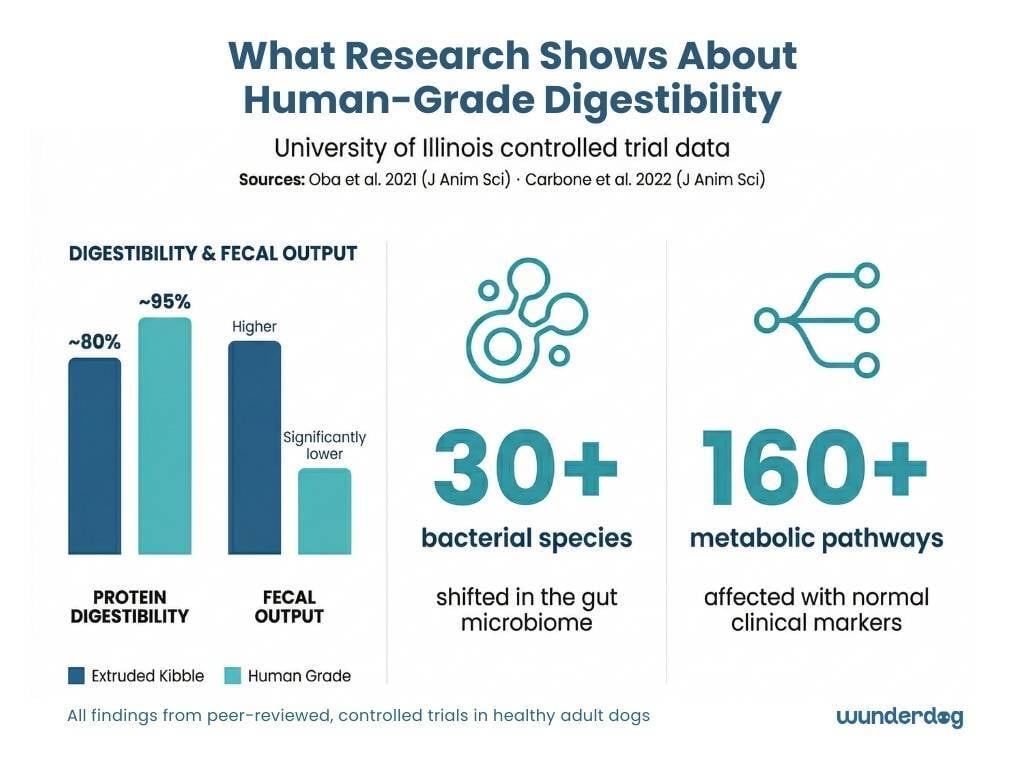
But do these standards translate into measurable differences for dogs?
University of Illinois research found very high digestibility of protein, fat, and amino acids, significantly lower fecal output compared to kibble, and distinct changes in fecal microbial communities. A 2022 study showed marked shifts in more than 30 bacterial species and over 160 metabolic pathways with normal clinical markers. For owners whose dogs struggle with persistent digestive issues that seem to signal something deeper, these findings offer real context for why diet quality matters.
At the same time, however, while human grade is a strong indicator of process and ingredient quality, it is not a stand alone health guarantee.
Human grade is not just about ingredients. It is about how the kitchen is run. The common thread across every major regulatory framework is independent oversight, documented processes, and ingredient traceability. Responsible producers use HACCP (Hazard Analysis and Critical Control Points), which identifies hazards at each production step and sets tight controls at critical points like cooking temperature.
Wunderdog, for example, produces its fresh, gently cooked meals entirely in house, operating to HACCP standards with an “A” rating from Dubai Public Health Services. Every recipe is formulated by a veterinary nutritionist using locally sourced, halal certified ingredients. Working with audited suppliers reduces contamination risks, maintains consistent nutrient levels, and ensures traceability. When you understand what quality nutrition really means at the ingredient level, these sourcing standards carry real weight.
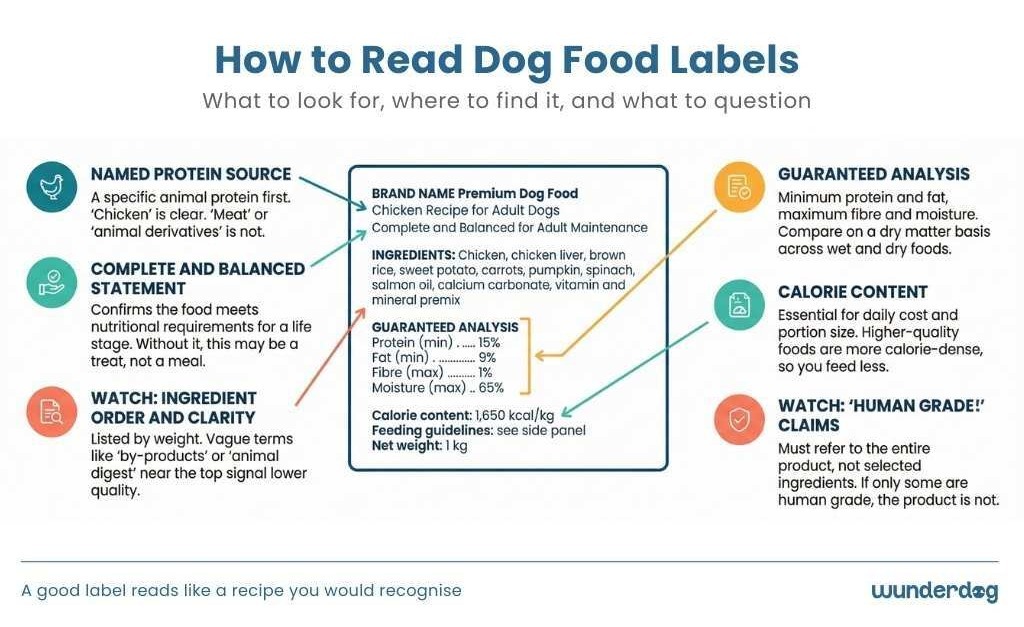
If a product is truly human grade, that should be clear on the front of packaging. The term should refer to the entire product. If it does not meet the standard, the term must not appear anywhere, including the ingredient list. For imported brands, check which regulatory body oversees production and whether the label cites a recognised standard. For locally produced food, look for facility ratings and food safety certification. Regardless of origin, a well formulated product reads like a recognisable recipe: named animal proteins, clear carbohydrate and fat sources, plus a vitamin and mineral premix. Clear feeding guidelines and calorie information help you compare cost per day.
A short conversation can reveal a brand’s priorities:
Brands that invest in science and systems are usually comfortable discussing them.
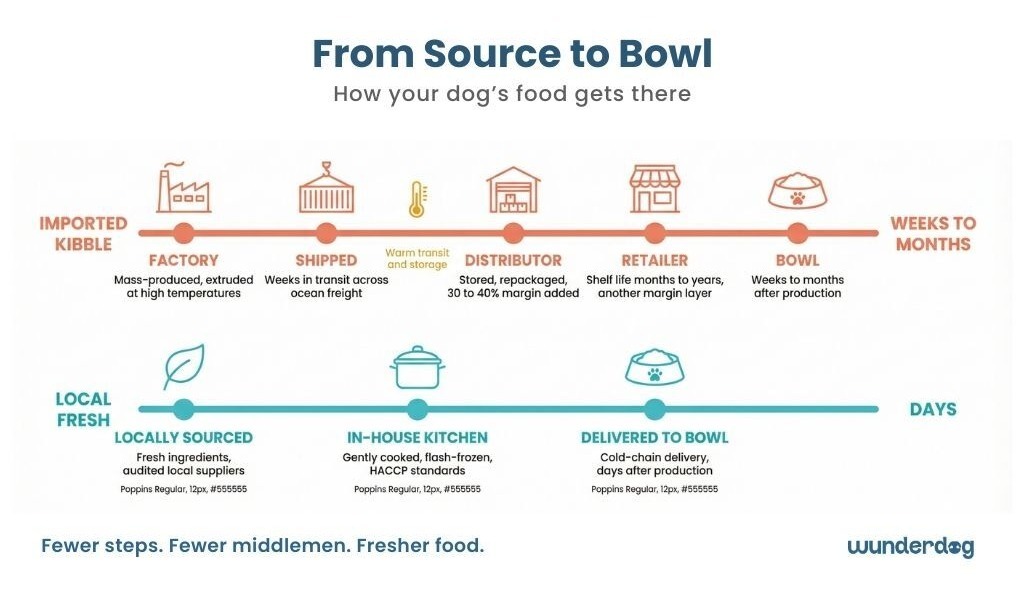
Human grade diets cost more, reflecting human edible ingredients, strict facility standards, and documentation requirements. In the UAE climate, the moisture content and digestibility of gently cooked meals can be particularly relevant, and imported kibble may lose freshness during long transit and storage in warm conditions.
They may appeal if you value fresh ingredients under strict hygiene controls, your dog has sensitive digestion and your vet agrees a highly digestible, gently cooked diet is appropriate, or you are comfortable with the higher daily cost for the standards behind the bowl. If your dog has dealt with unexplained digestive upset, a gently cooked approach designed to soothe the gut may offer a practical path forward.
Choosing the right food is a decision that carries real weight for owners who take their dog’s health seriously. Many dogs thrive on complete, balanced feed grade diets. The best choice meets nutritional standards, suits your dog’s age and health, and is eaten consistently. If your dog has a medical condition, involve your veterinarian in any major diet change.