

Functional Toppers
Puppy Training
Puppy Stage

Switching dog food should be simple, but it often is not. One change can mean loose stools, a gassy belly, or a dog who suddenly refuses their bowl.
The good news: most tummy upset is avoidable with a slow, structured transition.
Here is a step-by-step guide you can follow at home.
Many dog parents assume a new food can simply replace the old one in a single meal. But your dog’s gut is not designed for sudden change.
Your dog’s digestive system is home to trillions of microorganisms. These include bacteria, fungi, and other microbes that collectively form the gut microbiome.
This microbiome is finely tuned to process the specific proteins, fats, and carbohydrates in your dog’s current diet. When you abruptly introduce a new food, you are essentially changing the fuel source overnight. The gut bacteria have not had time to adapt.
The result is digestive upset. This can show up as loose stools, gas, bloating, vomiting, or a general reluctance to eat. It is not a sign that the new food is bad. It is a sign that the gut needs time to recalibrate.
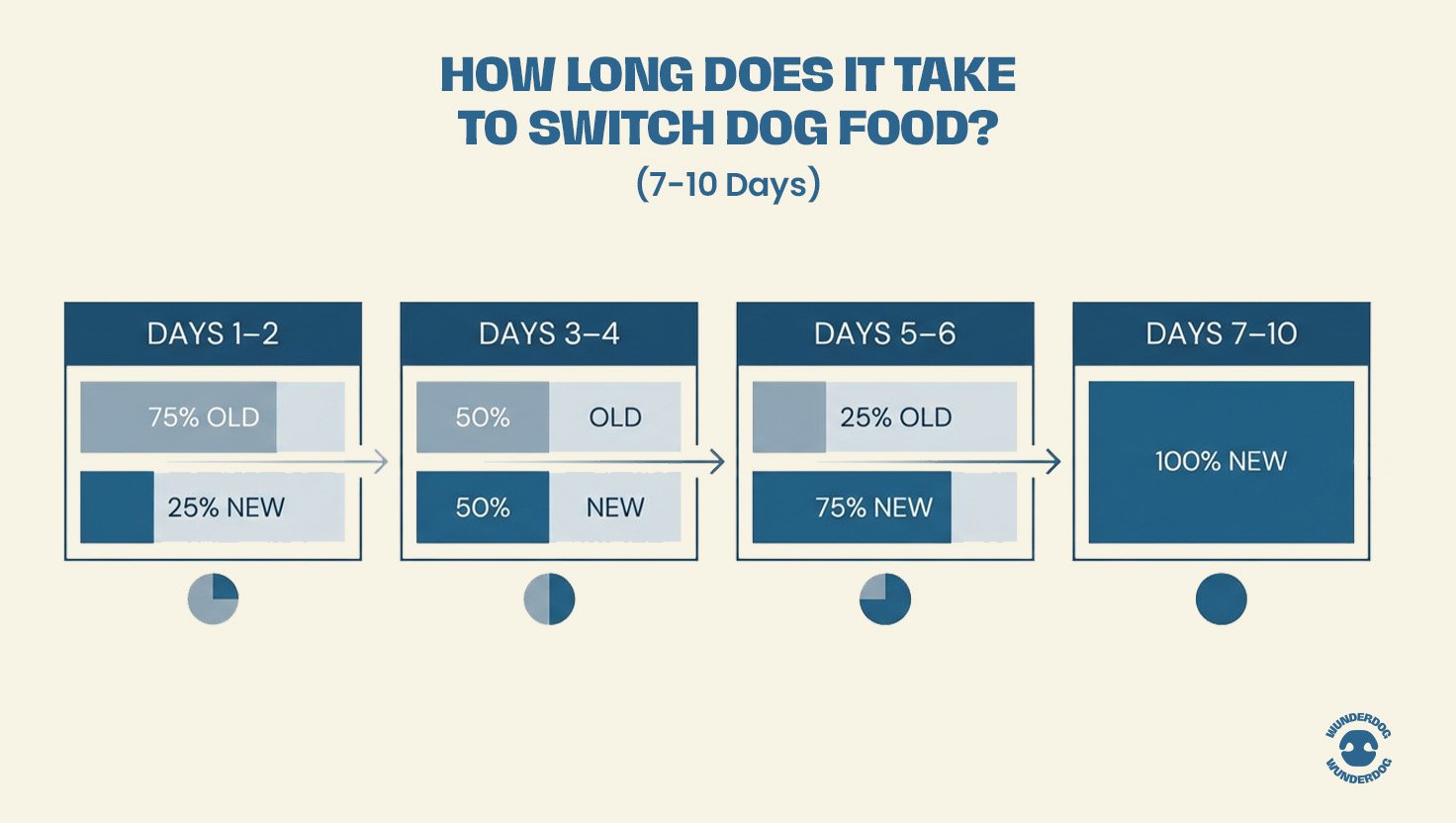
Most veterinarians and canine nutritionists recommend a 7-10 day dog food transition for healthy adult dogs. This timeline gives the digestive system enough runway to adjust without causing undue stress. Some dogs, particularly those with sensitive stomachs or food sensitivities, may benefit from stretching this to 14 days or more.
Think of the transition not as a rigid recipe, but as a flexible guide. If your dog is thriving, you can move through the stages a little faster. If you notice signs of digestive discomfort, slow down or pause entirely. The goal is a seamless handover, not a race to the finish.
 Switching from kibble to fresh food? This slow introduction is even more important. Fresh food contains higher moisture and different fat-to-fibre ratios, so the gut needs time to adjust to the new texture and nutrient profile.
A successful dog food transition is not just the absence of problems. There are positive signs to look out for too:
If you see these signs, you are on the right track.
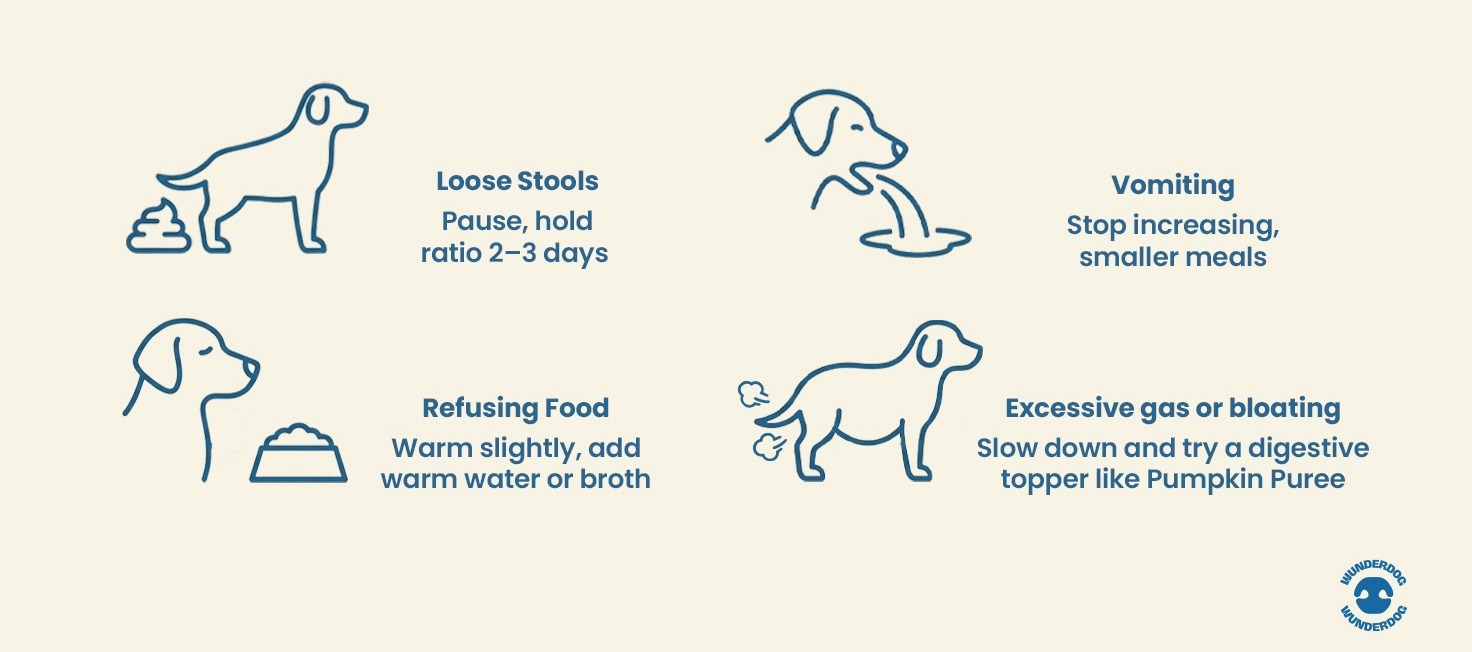
Even with the best schedule, some dogs need extra support. Below are the most common challenges and what to do if they happen.
 Avoid switching to another new food immediately if problems arise. Give your dog time to adapt to the current transition before making further changes.
If you notice switching dog food causing diarrhoea, loose stools, or vomiting, do not panic. Do not stop the transition entirely. Instead, go back one step.
For example, if your dog reacts at the 50/50 stage, return to 75% old food and 25% new food for a few days. Once things stabilise, try moving forward again more slowly.
Some dogs simply need a gentler pace, especially if they have a history of digestive sensitivity, past food intolerances, chronic gut inflammation, or have recently been ill or on antibiotics.
Some dogs are naturally more sensitive to dietary changes, whether due to breed predisposition, previous digestive issues, or just a more reactive gut. If your dog falls into this camp, there are a few natural additions that can make the transition significantly easier.
One of the reasons food transitions cause problems is the dramatic difference in texture, moisture, and ingredient complexity between old and new diets. Highly processed foods, such as extruded kibble, are typically low in moisture and rely on rendered fats and synthetic nutrient premixes. Moving from that to a more whole-food diet can be a bigger jump for the gut than it appears.
Fresh, gently cooked food tends to be more bioavailable, meaning the body can absorb nutrients more efficiently with less digestive effort. Higher moisture content also supports hydration and softer stool formation during the changeover period.
At Wunderdog, our meals are portioned, fresh-frozen, and delivered ready to serve. Each recipe is formulated by a veterinary nutritionist and gently cooked to preserve nutrients while remaining highly digestible. If you are considering a move to fresh food, a structured transition using the guide above is the best way to start.
Ready to switch? Explore our meal plans and start your dog’s transition with confidence.
This article is for informational purposes only and does not replace professional veterinary advice. If your dog experiences persistent vomiting, bloody stools, or refuses food for more than 48 hours during a transition, contact your veterinarian.
Related reading: Reading the Signs: When Digestive Issues Signal Something More